

Offering Choices: How to Open an IPV Conversation Without Taking Over
Coercive control takes choices away. A clinician who moves straight to advice can accidentally repeat that. Here is one way to hand the agenda back.

Recognizing Coercive Control in the Therapy Room
Coercive control is rarely captured by one isolated incident. How therapists can look beyond individual conflicts and recognize the broader pattern.
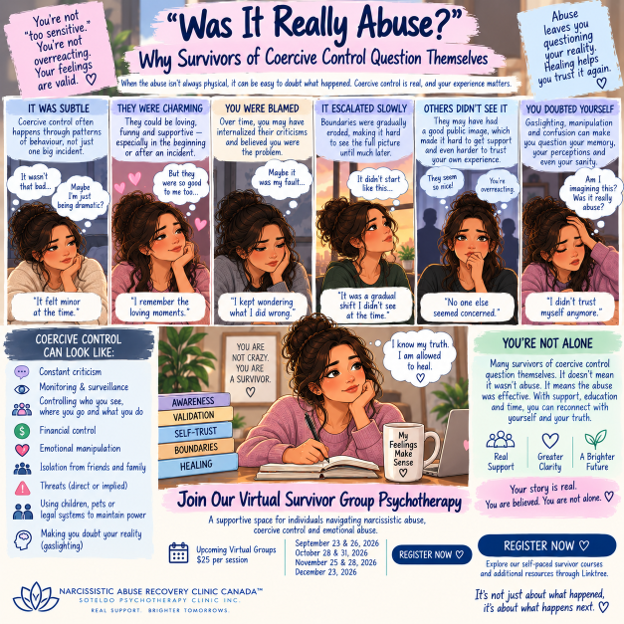
“Was It Really Abuse?” Why Survivors of Coercive Control Question Themselves
Not every abusive relationship contains one dramatic event that explains everything. Sometimes it is hundreds of smaller experiences.
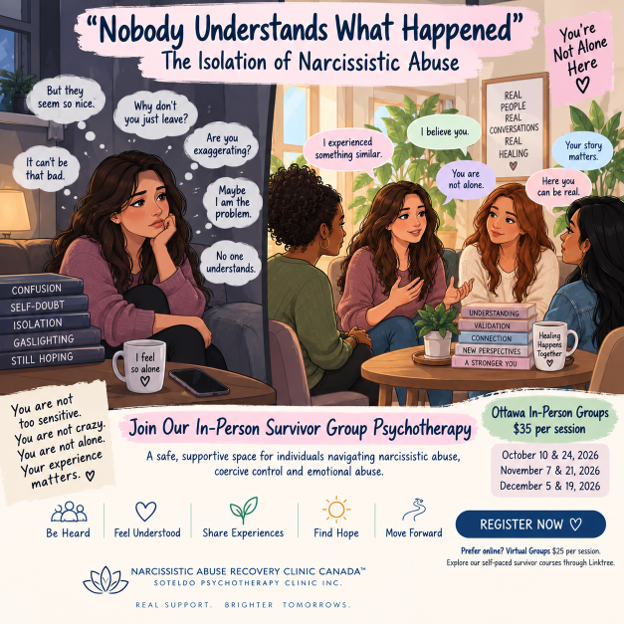
“Nobody Understands What Happened”: The Isolation of Narcissistic Abuse
Survivors of narcissistic abuse can feel alone even when surrounded by others. Being witnessed and understood can be an important part of recovery.

Narcissistic Abuse Support in Ottawa: Where to Start
Looking for narcissistic abuse support in Ottawa? Learn about individual therapy, survivor groups, crisis resources and how to choose a trauma-informed therapist.

Narcissistic Abuse Recovery Stages: What to Expect
What are the stages of narcissistic abuse recovery? Learn what survivors commonly experience, from confusion and grief to rebuilding boundaries and self-trust.

How to Heal From Narcissistic Abuse: A Gentle Guide to Recovery
Healing from narcissistic abuse takes time. Learn common stages of recovery, why it can feel so confusing, and practical steps toward rebuilding trust in yourself.
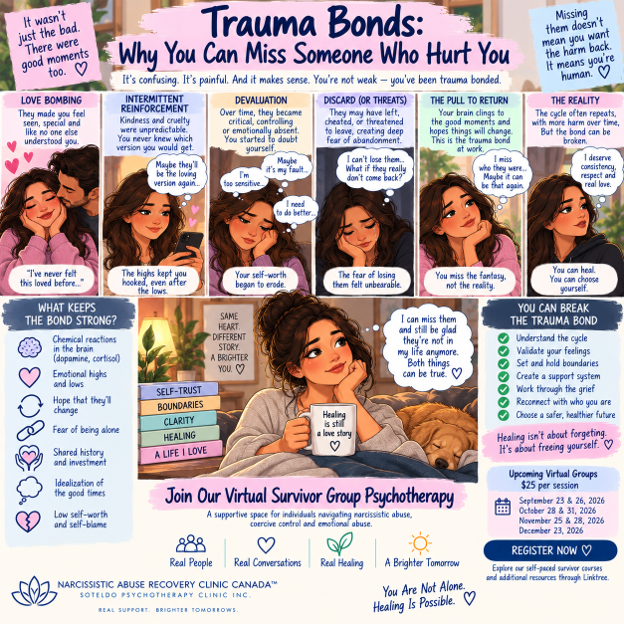
Trauma Bonds: Why You Can Miss Someone Who Hurt You
One of the most confusing experiences after leaving a harmful relationship can be missing the person who hurt you. You may know why you left.
Parallel Parenting with a Narcissistic Ex: A Survival Guide
Co-parenting requires cooperation — something a high-conflict or narcissistic ex will never genuinely offer. Parallel parenting is the realistic alternative that protects you and
Childhood Emotional Neglect: The Wound You Can’t Remember
Many adults who end up in narcissistic relationships grew up in homes where nothing 'bad' happened — but something essential was missing. Emotional neglect is the invisible wound