Narcissistic Abuse Recovery Clinic Canada™

Narcissistic Abuse Recovery and Family Mediation

You deserve relationships that feel safe — not familiar.

Founded by Raquel Soteldo, RP — Soteldo Psychotherapy Clinic

If you’re unsure whether what you experienced was narcissistic abuse, emotional neglect, or trauma bonding, you’re not alone. Many people arrive here simply trying to make sense of patterns that felt confusing, painful, or destabilizing over time.

6+ years specializing in narcissistic family trauma • Thousands of clients supported • Trauma-informed, evidence-based

Narcissistic Abuse Recovery Clinic Canada™

Narcissistic Abuse Recovery and Family Mediation

You deserve relationships that feel safe — not familiar.

Founded by Raquel Soteldo, RP — Soteldo Psychotherapy Clinic

If you’re unsure whether what you experienced was narcissistic abuse, emotional neglect, or trauma bonding, you’re not alone. Many people arrive here simply trying to make sense of patterns that felt confusing, painful, or destabilizing over time.

hero-raquel-photo

5+ years specializing in narcissistic family trauma • Thousands of clients supported • Trauma-informed, evidence-based

Narcissistic Abuse Recovery Clinic Canada™

Narcissistic Abuse Recovery and Family Mediation

You deserve relationships that feel safe — not familiar.

Founded by Raquel Soteldo, RP — Soteldo Psychotherapy Clinic

If you’re unsure whether what you experienced was narcissistic abuse, emotional neglect, or trauma bonding, you’re not alone. Many people arrive here simply trying to make sense of patterns that felt confusing, painful, or destabilizing over time.

6+ years specializing in narcissistic family trauma • Thousands of clients supported • Trauma-informed, evidence-based

Narcissistic Abuse Recovery Clinic Canada™

Narcissistic Abuse Recovery and Family Mediation

You deserve relationships that feel safe — not familiar.

Founded by Raquel Soteldo, RP — Soteldo Psychotherapy Clinic

If you’re unsure whether what you experienced was narcissistic abuse, emotional neglect, or trauma bonding, you’re not alone. Many people arrive here simply trying to make sense of patterns that felt confusing, painful, or destabilizing over time.

hero-raquel-photo

5+ years specializing in narcissistic family trauma • Thousands of clients supported • Trauma-informed, evidence-based

Psychotherapist

Raquel Soteldo, RP, CCC, Clinical Supervisor

Clinical Director, Soteldo Psychotherapy Clinic Inc.
Founder, National Center of Excellence for IPV & Coercive Control

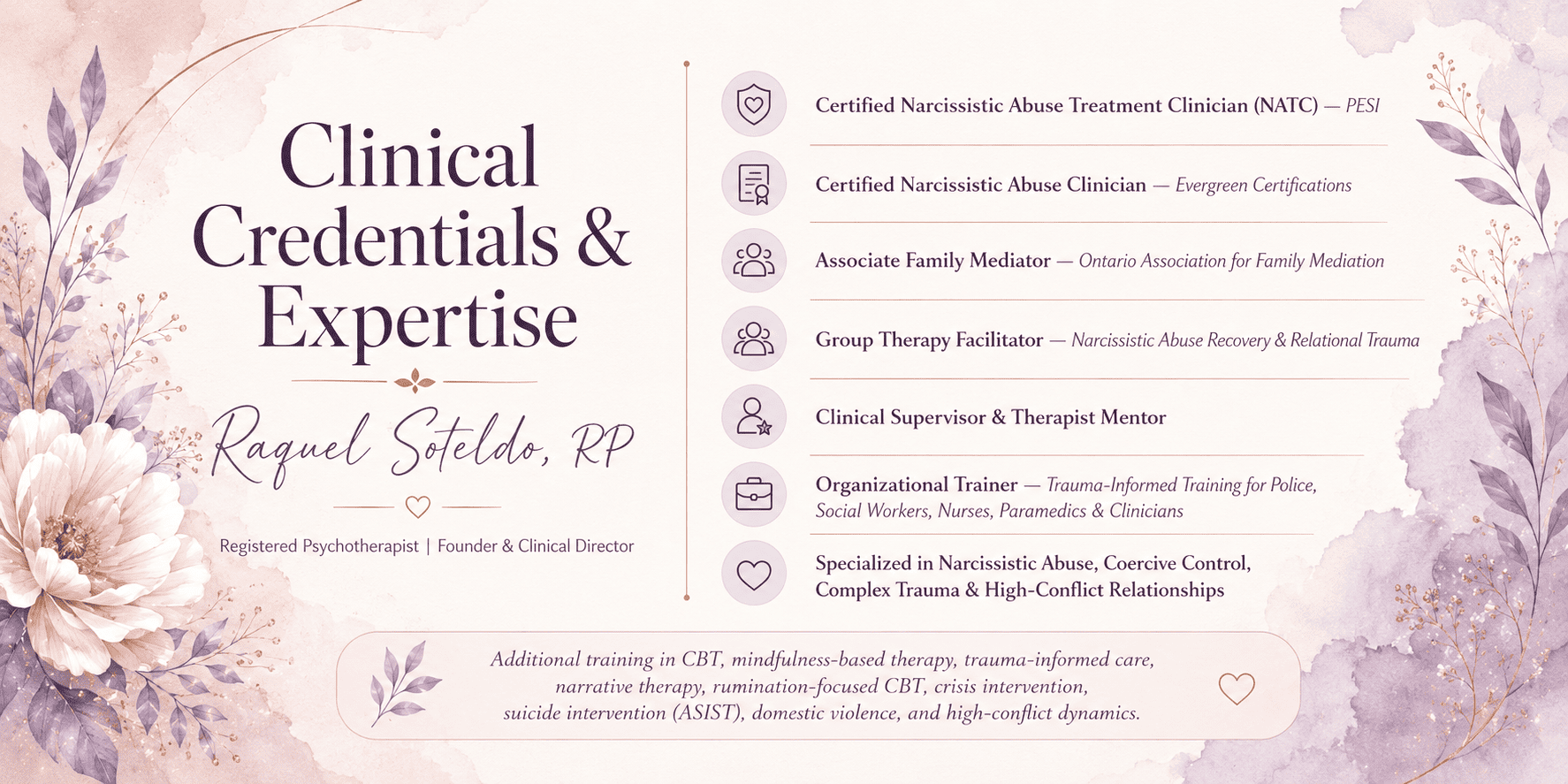
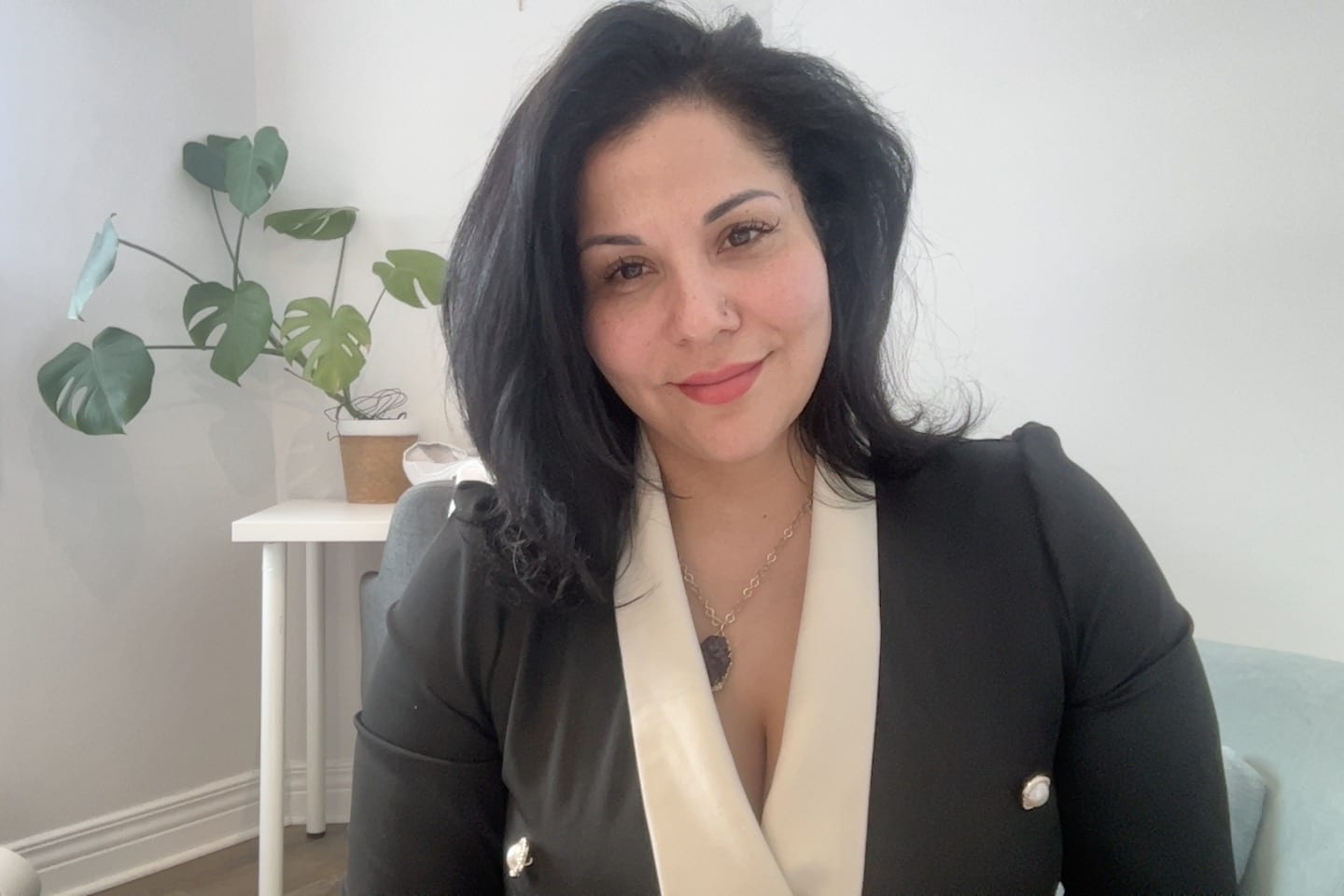
Raquel Soteldo is a Registered Psychotherapist, Canadian Certified Counsellor, Clinical Supervisor, Family Mediator, organizational trainer, and Clinical Director of Soteldo Psychotherapy Clinic Inc. She is also the founder of the National Center of Excellence for IPV & Coercive Control, a national initiative focused on strengthening how professionals and systems recognize, understand, and respond to interpersonal violence and coercive control.

Her clinical practice specializes in intimate partner violence (IPV), coercive control, narcissistic abuse, sociopathic and psychopathic abuse patterns, trauma bonding, psychological and emotional abuse, domestic violence, reproductive coercion, betrayal trauma, and post-separation abuse.

Raquel brings a background in behavioural analysis to her psychotherapy practice. This allows her to examine not only what clients think and feel, but also behavioural patterns, reinforcement cycles, environmental contingencies, relational dynamics, and survival adaptations that can develop within abusive relationships. This lens is particularly relevant to understanding intermittent reinforcement, trauma bonding, coercive behavioural patterns, avoidance, boundary erosion, gaslighting, and the ways survivors may alter their behaviour in response to prolonged control, manipulation, intimidation, or threat.

Her integrative, trauma-informed clinical approach draws from Acceptance and Commitment Therapy (ACT), Cognitive Processing Therapy (CPT)-informed strategies, EMDR-focused trauma treatment strategies, clinical hypnotherapy, behavioural principles, somatic and nervous-system-informed interventions, and psychoeducation. Treatment is individualized and flexible rather than rigidly protocol-driven, allowing interventions to be modified in the moment according to safety, nervous-system activation, dissociation, ongoing contact with an abusive partner or former partner, readiness for trauma processing, and each client’s individual needs and goals.

Raquel is also the creator of the BRAVE Framework — Building Recognition, Advocacy, Validation & Early Response, a trauma- and violence-informed framework designed to strengthen the recognition of IPV and coercive control while promoting validation, survivor agency, safer intervention, advocacy, and earlier response.

Beyond individual psychotherapy, Raquel facilitates therapeutic groups for survivors and provides specialized education and consultation to the professionals and organizations supporting them. She develops and delivers organizational training, professional workshops, and frontline education for staff, service providers, advocates, clinicians, and other professionals who encounter victims and survivors in their work.

She also delivers monthly Lunch & Learn educational sessions and is available for clinical consultation related to IPV and coercive control, including complex presentations involving narcissistic abuse, trauma bonding, post-separation dynamics, psychological abuse, and coercive patterns that may be difficult to identify through incident-based approaches alone.

Through the National Center of Excellence for IPV & Coercive Control, Raquel’s current focus is expanding education, training, consultation, and professional capacity at a national and federal level. The broader goal is to train, teach, and support the individuals and systems responsible for supporting victims and survivors of narcissistic abuse, sociopathic and psychopathic abuse patterns, coercive control, domestic violence, reproductive coercion, and intimate partner violence.

Her work recognizes that survivors frequently interact with multiple systems—including psychotherapy and mental health services, healthcare, victim services, policing, legal and family-court systems, social services, workplaces, and community organizations. Strengthening the knowledge and confidence of the professionals within these systems is therefore an important part of improving survivor response.

Raquel also provides clinical supervision to developing clinicians and university students across Ontario, supporting the development of trauma-informed, ethically grounded, and clinically sophisticated practice.

Alongside her clinical, supervisory, and organizational work, Raquel is currently completing her Doctorate in Counselling Psychology at Yorkville University, further developing her research and advanced clinical work in areas related to interpersonal violence and reproductive coercion.

At the centre of Raquel’s work is the belief that behaviours frequently described as “maladaptive” may have originally developed as intelligent responses to unsafe environments. Her approach therefore begins with curiosity rather than judgment: What function did this response serve? What was the person adapting to? Is that response still protecting them today? And what new choices become possible when safety, autonomy, psychological flexibility, and self-trust are restored?

Across psychotherapy, survivor groups, clinical supervision, consultation, professional education, and systems-level training, Raquel’s work has a common objective: to improve how we recognize abuse, how we respond to survivors, and how we equip the people responsible for supporting them.

Raquel brings a background in behavioural analysis to her psychotherapy practice. This allows her to examine not only what clients think and feel, but also behavioural patterns, reinforcement cycles, environmental contingencies, relational dynamics, and survival adaptations that can develop within abusive relationships. This lens is particularly relevant to understanding intermittent reinforcement, trauma bonding, coercive behavioural patterns, avoidance, boundary erosion, gaslighting, and the ways survivors may alter their behaviour in response to prolonged control, manipulation, intimidation, or threat.

Her integrative, trauma-informed clinical approach draws from Acceptance and Commitment Therapy (ACT), Cognitive Processing Therapy (CPT)-informed strategies, EMDR-focused trauma treatment strategies, clinical hypnotherapy, behavioural principles, somatic and nervous-system-informed interventions, and psychoeducation. Treatment is individualized and flexible rather than rigidly protocol-driven, allowing interventions to be modified in the moment according to safety, nervous-system activation, dissociation, ongoing contact with an abusive partner or former partner, readiness for trauma processing, and each client’s individual needs and goals.

Raquel is also the creator of the BRAVE Framework — Building Recognition, Advocacy, Validation & Early Response, a trauma- and violence-informed framework designed to strengthen the recognition of IPV and coercive control while promoting validation, survivor agency, safer intervention, advocacy, and earlier response.

Beyond individual psychotherapy, Raquel facilitates therapeutic groups for survivors and provides specialized education and consultation to the professionals and organizations supporting them. She develops and delivers organizational training, professional workshops, and frontline education for staff, service providers, advocates, clinicians, and other professionals who encounter victims and survivors in their work.

She also delivers monthly Lunch & Learn educational sessions and is available for clinical consultation related to IPV and coercive control, including complex presentations involving narcissistic abuse, trauma bonding, post-separation dynamics, psychological abuse, and coercive patterns that may be difficult to identify through incident-based approaches alone.

Through the National Center of Excellence for IPV & Coercive Control, Raquel’s current focus is expanding education, training, consultation, and professional capacity at a national and federal level. The broader goal is to train, teach, and support the individuals and systems responsible for supporting victims and survivors of narcissistic abuse, sociopathic and psychopathic abuse patterns, coercive control, domestic violence, reproductive coercion, and intimate partner violence.

Her work recognizes that survivors frequently interact with multiple systems—including psychotherapy and mental health services, healthcare, victim services, policing, legal and family-court systems, social services, workplaces, and community organizations. Strengthening the knowledge and confidence of the professionals within these systems is therefore an important part of improving survivor response.

Raquel also provides clinical supervision to developing clinicians and university students across Ontario, supporting the development of trauma-informed, ethically grounded, and clinically sophisticated practice.

Alongside her clinical, supervisory, and organizational work, Raquel is currently completing her Doctorate in Counselling Psychology at Yorkville University, further developing her research and advanced clinical work in areas related to interpersonal violence and reproductive coercion.

At the centre of Raquel’s work is the belief that behaviours frequently described as “maladaptive” may have originally developed as intelligent responses to unsafe environments. Her approach therefore begins with curiosity rather than judgment: What function did this response serve? What was the person adapting to? Is that response still protecting them today? And what new choices become possible when safety, autonomy, psychological flexibility, and self-trust are restored?

Across psychotherapy, survivor groups, clinical supervision, consultation, professional education, and systems-level training, Raquel’s work has a common objective: to improve how we recognize abuse, how we respond to survivors, and how we equip the people responsible for supporting them.
Specializations

icon 2

Narcissistic Abuse Recovery.

Specialized support to help you heal, rebuild self-worth, and break free from toxic patterns.

mental health icon

Complex Trauma Healing.​

Trauma-informed care to process deep emotional wounds and restore a sense of safety and wholeness.

ADHD icon

Undiagnosed ADHD Support.

Support for adults seeking clarity, understanding, and practical tools to improve focus and daily functioning.

icon

Anxiety and Depression Management

Evidence-based strategies to reduce overwhelm, regulate emotions, and build a more balanced life.

Choose the Pathway That Supports Your Next Step

Choose the Pathway That Supports Your Next Step

Healing does not look the same for everyone. Some people are just beginning to understand what happened. Others are ready for therapy, group support, education, training, or deeper personal change. Wherever you are, these pathways are here to help you move forward with clarity, compassion, and support.

For Individuals

Trauma-Informed Psychotherapy

Individual therapy for adults healing from narcissistic abuse, intimate partner violence, coercive control, and complex relational trauma. Sessions provide a safe, supportive space to understand what happened, regulate the nervous system, rebuild self-trust, strengthen boundaries, and begin feeling like yourself again. 

For Survivors

Survivor’s Group Therapy

A supportive monthly group therapy experience for survivors of narcissistic abuse and relational trauma. Through guided discussion, psychoeducation, reflection, and skill-building exercises, participants are supported in making sense of their experiences, reducing isolation, rebuilding confidence, and turning insight into meaningful personal growth.

For Professionals & Organizations

Organization Training

Trauma-informed training for organizations, frontline professionals, clinics, teams, and community providers. These programs support participants in deepening their understanding of narcissistic abuse, coercive control, trauma responses, emotional safety, boundaries, and practical trauma-informed communication.

For Accountability & Change

Behavioural Reformation Program

A structured program for individuals who have engaged in harmful relational patterns, coercive control, emotional abuse, or intimate partner violence, as well as professionals supporting this population. The program focuses on accountability, emotional regulation, respectful communication, healthier relationships, and long-term behavioural change.

Psychotherapist

Raquel Soteldo

Trauma-informed Registered Psychotherapist, Canadian Certified Counsellor, Narcissistic Abuse Recovery Certified Clinician, clinical director.

Treatment Plans & Therapeutic Interventions

Personalized, trauma-informed treatment plans are created collaboratively to support healing, emotional regulation, and long-term change.

Group Therapy Session

The Reality of Intimate Partner Violence

Behind every statistic is a person, family, and community impacted by abuse. These numbers highlight the urgent need for prevention, accountability, and accessible support services across Ontario and Canada.

This framing feels more trauma-informed and clinically aligned with the mission of Narcissistic Abuse Recovery Clinic Canada and Soteldo Psychotherapy Clinic.

Intimate Partner Violence

278 per 100,000 Ontarians

In 2024, Ontario recorded 278 victims of police-reported intimate partner violence per 100,000 population, the lowest provincial rate in Canada. However, thousands of individuals continue to experience violence, coercive control, and abuse within intimate relationships each year.

Source:
Statistics Canada. (2025). Victims of police-reported intimate partner violence, by year and province or territory, 2018–2024.

Family Violence

237 per 100,000 Ontarians

In 2024, Ontario reported 237 victims of police-reported family violence per 100,000 population. Family violence can include abuse perpetrated by parents, children, siblings, or other family members and remains a significant public health and safety concern.

Source:
Statistics Canada. (2025). Victims of police-reported family violence, by year and province or territory, 2018–2024.

Femicide

More than 1,000 women killed in Ontario since 1990

Since 1990, over 1,000 women and girls have been victims of femicide in Ontario, highlighting the ongoing risks associated with intimate partner violence and gender-based violence. Femicide refers to the killing of women and girls because of their gender and often occurs within the context of coercive control and abusive relationships.

Source:
Ontario Association of Interval & Transition Houses (OAITH); Ontario Legislature IPV Study.

Underreporting of Domestic Abuse

Most incidents are never reported

Domestic violence remains significantly underreported. Research consistently shows many survivors do not contact police due to fear, financial dependence, shame, concern for children, or fear of retaliation. As a result, police-reported statistics likely represent only a portion of actual incidents.

Source:
Government of Canada, Women and Gender Equality Canada; Statistics Canada.

Emergency Shelter Usage

Thousands seek shelter each year

On any given night, thousands of women and children across Canada rely on emergency shelters to escape domestic violence. Shelter usage statistics highlight the ongoing need for safe housing, crisis intervention, and community support services.

Source:
Women and Gender Equality Canada; Statistics Canada.

Indigenous Women

3.5 Times Higher Risk

Indigenous women experience intimate partner violence at rates approximately 3.5 times higher than non-Indigenous women and face disproportionately high rates of violence, homicide, and systemic barriers to safety and support.

Source:
Government of Canada. Fact Sheet: Family Violence.

Services

Specialized Therapy & Clinical Programs

Adults
  • Narcissistic Abuse
  • Recovery Clinical
  • Program
  • Anxiety (GAD)
  • Obsessive Compulsive
  • Behaviour
  • Panic Attacks
  • PTSD
  • Depression
  • Cognitive Dissonance
  • Self-Esteem
  • Domestic Violence/IPV
  • Divorce and Co-parenting
  • Counselling
  • Binge Eating Disorder
  • Peri-/Pre/Menopause
  • Symptoms
  • Post-Partum Depression
  • Fertility Stress
  • Undiagnosed ADHD –Trauma-based
  • Veterans
  • Paramedics
  • Police
  • Nurses
  • Doctors
  • Firemen
  • Couple distress
  • Depression of a partner
  • PTSD of a partner
  • Narcissistic Traits in one partner
  • Domestic Violence/IPV
  • Reproductive Coercion
  • Separation/Divorce/Coparenting Counselling
Note: unable to see clients with antagonistic partners together
  • Anxiety (OCD, PTSD, GAD)
  • ADHD
  • Social Anxiety
  • Bullying
  • Relationships
  • Communication
  • ADHD
  • Anxiety (OCD, PTSD, GAD)
  • Depression
  • Anxiety
  • Social Anxiety
  • Behavioral issues
  • Codependency Healing
  • Narcissistic Abuse Victim Healing
  • Adult Children of Narcissistic Parents
  • Co-Parenting Coach
  • Divorcing a Narcissist
  • IPV/DV Counselling
  • Pregnancy Counselling
  • Reproductive Coercion Counselling
  • Sexual health Counselling
  • Abortion Counselling
  • Menopause Counselling
  • Geriatric Pregnancy Counselling
  • Narcissistic Abuse Recovery Clinical Program – For Survivors
  • Narcissistic Abuse Recovery Clinical Program – For Clinicians
  • Business Consultancy – RP, SW, CCC
  • Trauma-informed Hypnosis and NLP Training
  • Clinical Supervision & Consultancy
  • Personal Development Programs

Our Core Services

Psychotherapy Services

Individual Psychotherapy

We offer trauma-informed, person-centered therapy that integrates modalities such as Cognitive Behavioral Therapy (CBT), Internal Family Systems (IFS), and EMDR to address:

  • Anxiety & panic disorders
  • Depression & mood instability
  • Complex PTSD & trauma recovery
  • Grief & loss
  • Self-esteem & identity challenges

Strengthen communication, rebuild trust, and navigate conflict in a safe and structured environment. We support:

  • Intimacy and emotional connection
  • Conflict resolution
  • Infidelity recovery
  • Narcissistic abuse recovery

    Using clinical hypnosis and guided imagery, we support behavior change and subconscious healing in areas such as:

  • Quit smoking
  • Weight loss and mindful eating
  • Stress and anxiety relief
  • Confidence building
  • Performance enhancement (sports, academics, public speaking)

    A signature service at Soteldo Psychotherapy, we offer deep healing for survivors of high-conflict and emotionally abusive relationships. Services include:

  • Safety planning and emotional stabilization
  • Trauma-informed care for CPTSD
  • Psychoeducation on manipulation and gaslighting
  • Group therapy and workshops

    Clinical supervision for Registered Psychotherapists (Qualifying) and mental health professionals seeking CRPO-aligned support.

  • Case conceptualization
  • Ethics & self-of-the-therapist work
  • Business mentorship & private practice development

    Monthly free and paid online and in-person workshops for clients and clinicians. Topics include:

  • Boundaries and assertiveness
  • Emotional regulation
  • Narcissistic abuse awareness
  • Hypnosis for healing

Book Free Consult

Connect with a therapist to discuss your situation and recovery goals.

Free Survivor eBooks

Download practical guides and educational resources.

Survivor Courses

Self-paced programs designed for healing and recovery

Book Free Consult

Connect with a therapist to discuss your situation and recovery goals.

Free Survivor eBooks

Download practical guides and educational resources.

Survivor Courses

Self-paced programs designed for healing and recovery

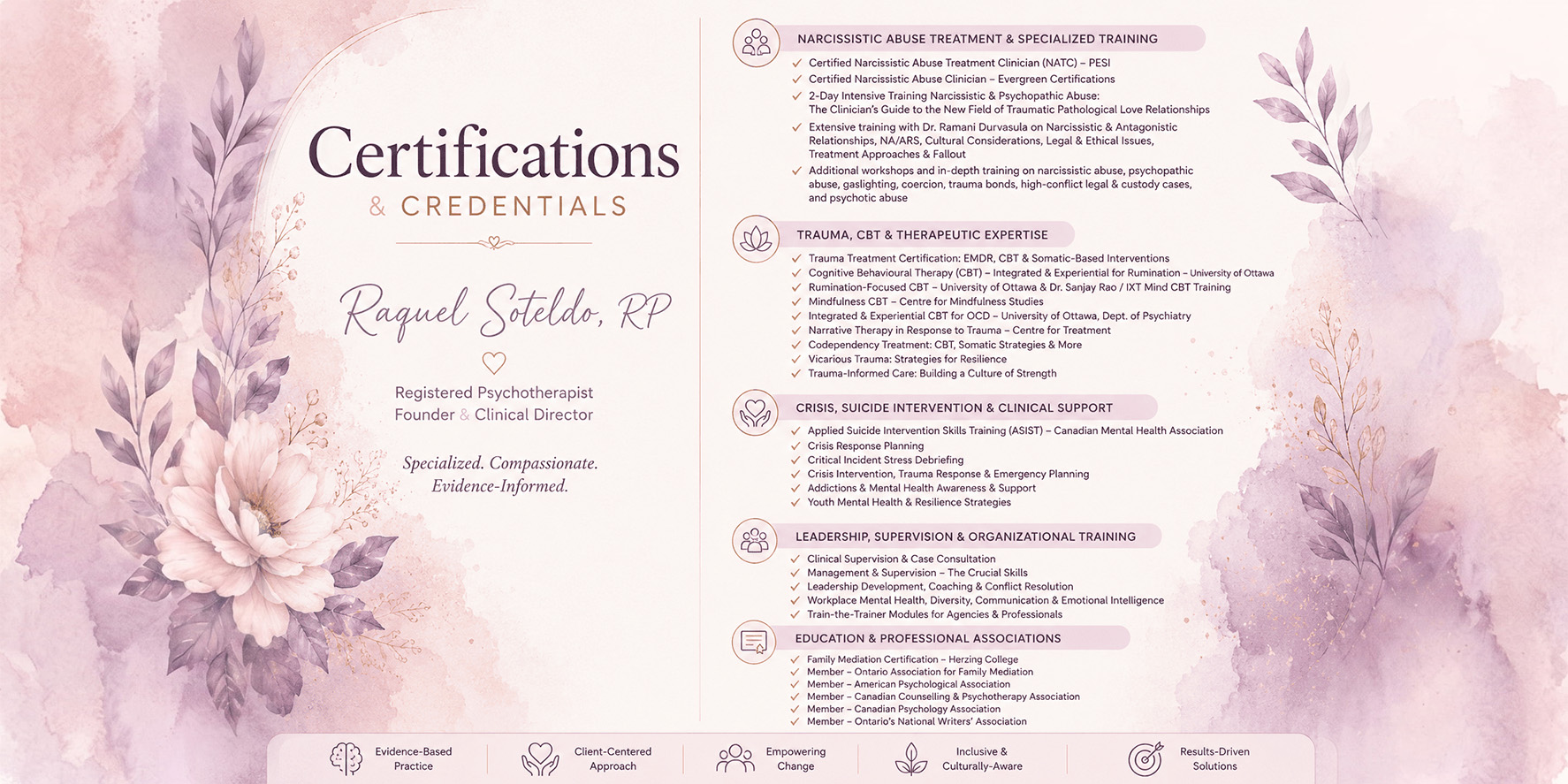
Credentials

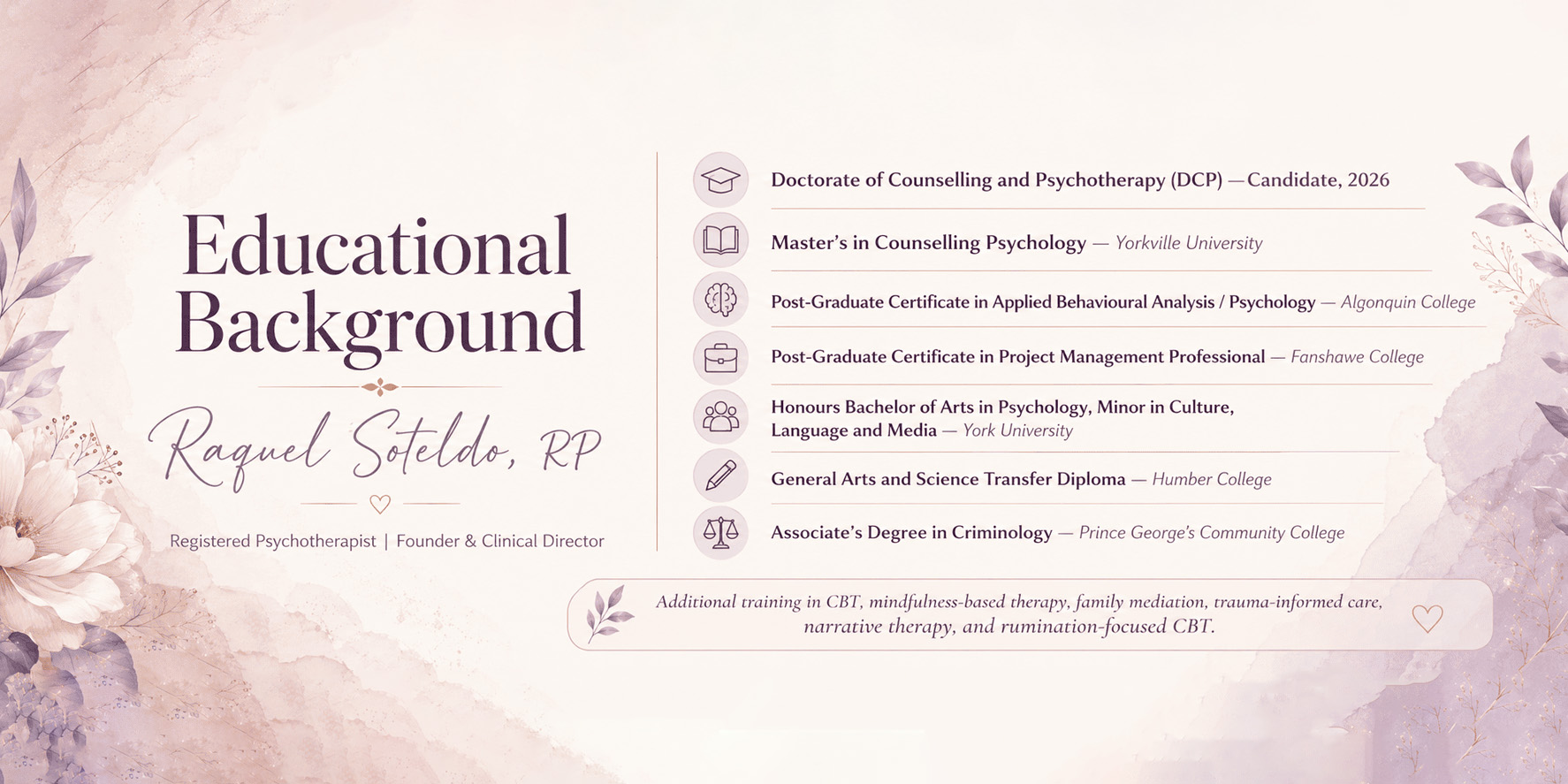
Educational Background

Criminology Associated Degree
PGCC | Maryland

GAS
Humber College | Ontario

Psychology Honours Bachelors Degree with a Minor in Culture, Language and Media
York University | Ontario

Project Management Professional Degree
Fanshawe College | Ontario

Applied Behavioural Analysis Post-Graduate Degree

Algonquin College | Ontario

Master’s in Arts in Counselling Psychology
Yorkville University | Ontario

Doctorate of Counselling and Psychotherapy (DCP)
Candidate of 2026

Not Sure Where to Start? Tell Raquel What You're Going Through.

Just write a few words about what you’re going through — and Raquel will personally write back with exactly what she recommends for you.

No judgment. No pressure. Just someone who has heard it all before.

png
Book Recommendation