
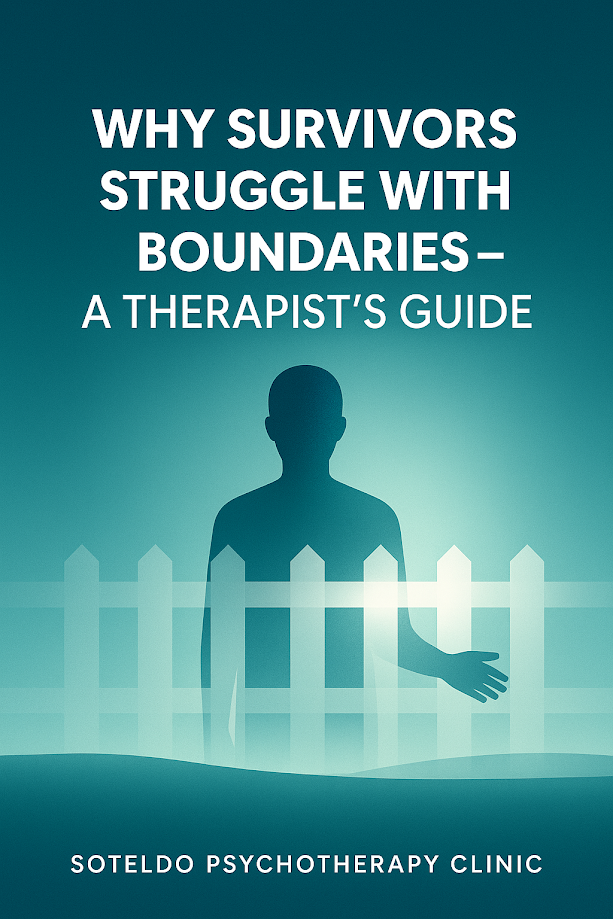
Many survivors struggle with boundaries after narcissistic abuse. They often fear rejection, abandonment, or retaliation when they try to protect their space. Years of being punished for setting limits taught them that saying “no” leads to conflict or loss.
Why Boundaries Feel Dangerous
In abusive relationships, abusers punished boundaries. Survivors learned to stay quiet and comply to avoid anger or withdrawal. Because of that, setting healthy boundaries after narcissistic abuse can now feel unsafe—even when people around them are supportive.
Clinical Focus
Therapists can help survivors rebuild their sense of safety and confidence through:
• Normalize – Explain that boundaries feel scary at first, but they are acts of self-love.
• Practice – Role-play boundary-setting during sessions to build real-world confidence.
• Celebrate – Reinforce even the smallest steps toward assertiveness and self-respect.
👉 At Soteldo Psychotherapy Clinic, we help therapists support clients in developing healthy boundaries after narcissistic abuse with compassion and skill.
