
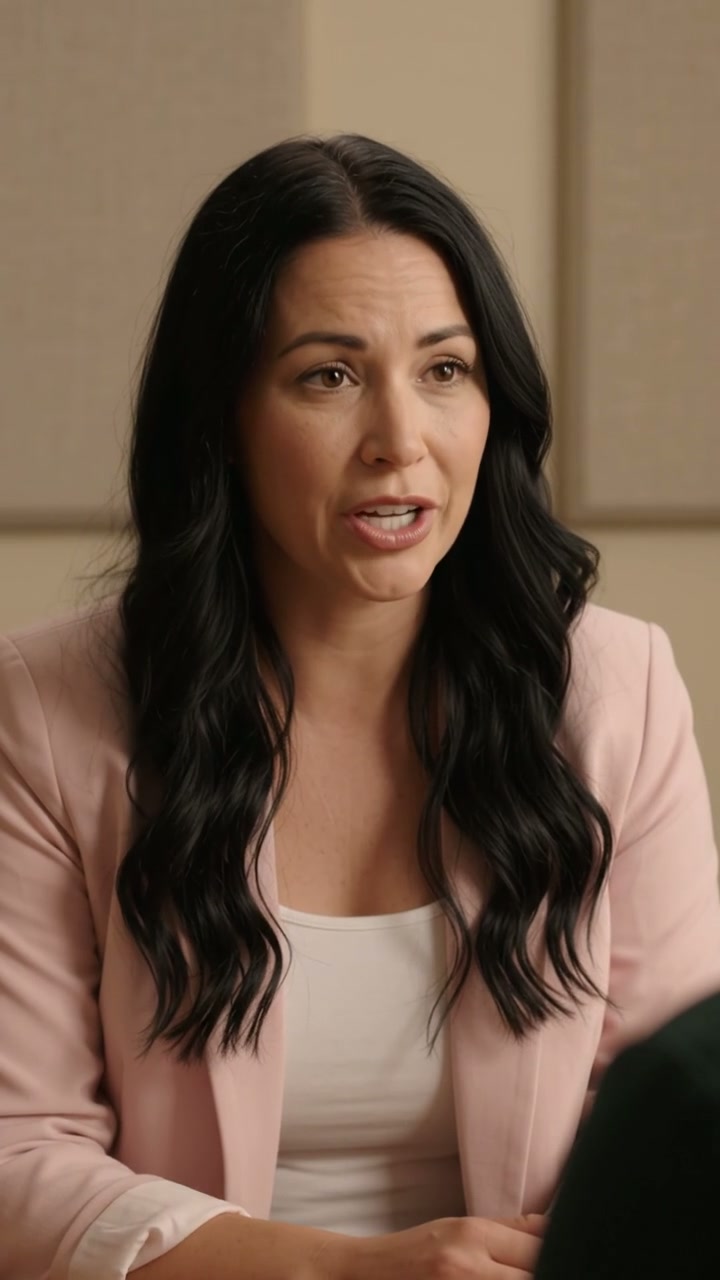
This is a scripted training scenario. The people in the clip are demonstrating a clinician response; they are not clients and this is not a real session.
The first sentence after a disclosure decides how much of the rest you will hear. Here is what one clinician says, and why it works.
A disclosure lands, and the clinician has about one sentence to decide what happens next.
I’m scared of what he’ll do.
I’m listening. Tell me what’s worrying you.
He checks my phone all the time.
From the clip — client, clinician, client
Why this matters clinically
People do not disclose fear casually. Before a sentence like “I’m scared of what he’ll do” is spoken, the speaker has usually weighed whether the listener can be trusted with it. The response that follows confirms or contradicts that judgement, and it shapes how much of the rest of the account you will hear.
The clinician’s answer does three small things at once. She signals that she is present (“I’m listening”), she invites continuation without directing it, and she asks the client to describe the worry in her own terms rather than answering a question the clinician has prepared. Nothing is evaluated, corrected or summarised in that first turn.
What comes next is the point: “He checks my phone all the time.” A controlling behaviour surfaces on its own, without a screening item and without the clinician steering toward it. When a client volunteers a behaviour, it arrives with context, and context is what makes an account usable.
What to notice and try
- Answer the disclosure before you answer the content. Presence first, information second.
- Use an open invitation — “tell me what’s worrying you” — instead of the next item on your list.
- Resist summarising too early. A summary that gets it wrong costs you the rest of the account.
- Let the client choose which behaviour to describe first; it is usually the one that matters most.
- Note the exact wording you hear. “Checks my phone” is a more precise record than “controlling”.
Where this sits in the training
B.R.A.V.E.™ is an interactional protocol for intimate partner violence and coercive control. It is not a screening tool and is not intended to replace existing screening, investigative or risk-assessment processes. It describes what happens inside the conversation: how the interaction is opened, paced and closed, and how what is disclosed is documented.
Keep going
- Professional training in intimate partner violence and coercive control
- B.R.A.V.E.™ in Practice — applied training for frontline professionals
- B.R.A.V.E.™ for police and law enforcement
- Narcissistic abuse therapy in Ottawa and across Ontario
- HELP NOW — crisis and legal resources
- Clinic services and free resources (Linktree)
This article is professional education. It is not clinical supervision, and it is not a substitute for therapy. If you or someone you know is in immediate danger, call 911.
B.R.A.V.E.™ — trademark registration pending, 2026. © 2026 Raquel Soteldo.