
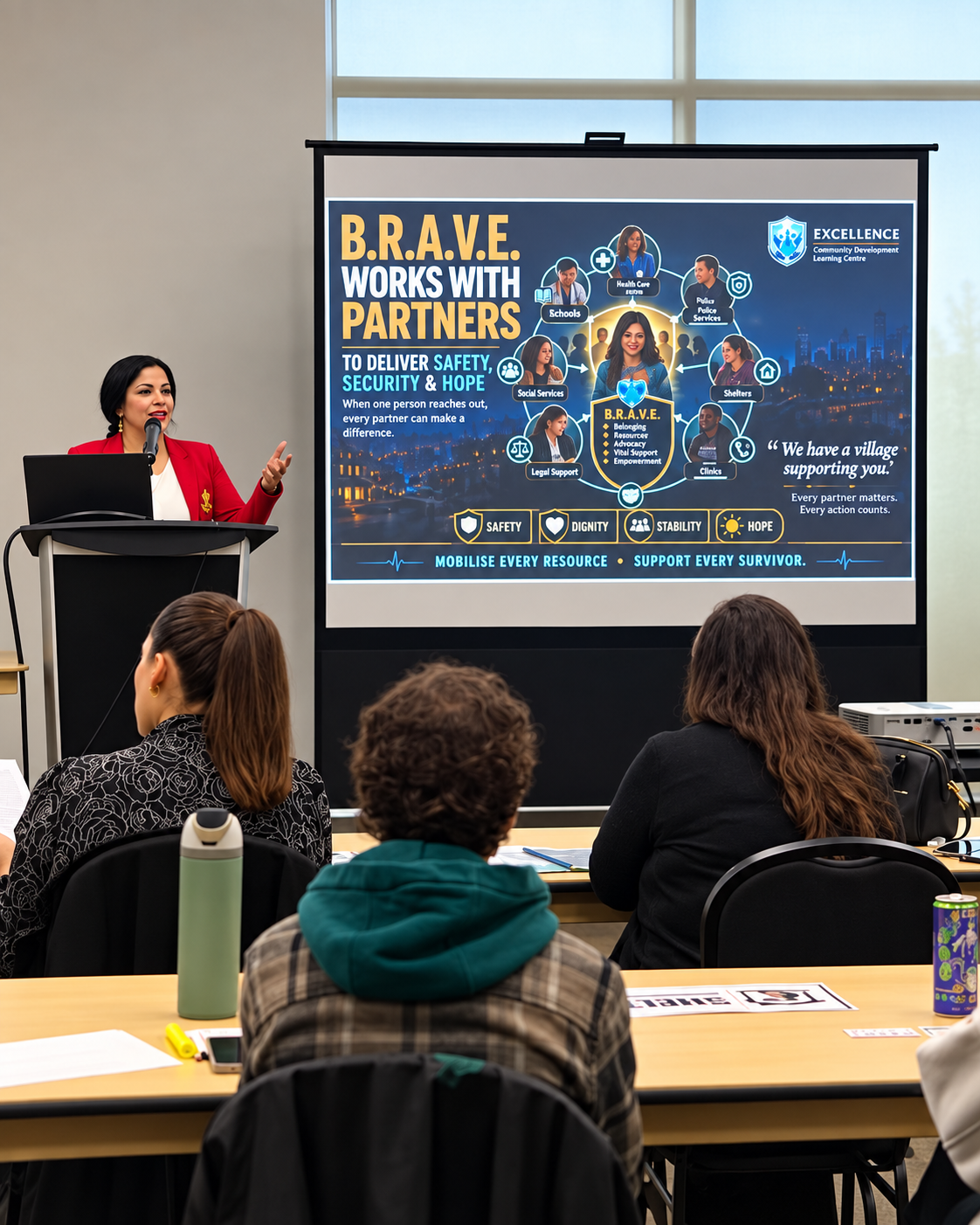
I had the opportunity to deliver the B.R.A.V.E.™ Framework for Intimate Partner Violence and Coercive Control workshop, commissioned by Ottawa Victim Services (OVS), with participation from OVS and the Police Victim Support Unit (VSU).
The training explored recognizing intimate partner violence, coercive control, narcissistic abuse dynamics, trauma responses, and the importance of trauma-informed communication during frontline interactions.
Through the B.R.A.V.E.™ Framework — Build Safety, Recognize Control, Anchor Stability, Validate Experience, and Empower Agency — we explored practical questions and approaches that can support professionals in recognizing patterns of abuse and responding with greater awareness and sensitivity.
My hope is that even one question, one observation, or one shift in how we engage with a survivor can help identify a potential safety concern and guide someone toward appropriate support.
Grateful for the opportunity to contribute to ongoing professional development and for the thoughtful reflections shared throughout this experience.
The B.R.A.V.E.™ Framework for IPV & Coercive Control © 2026 Raquel Soteldo, RP
#BRAVEFramework #CoerciveControl #IntimatePartnerViolence #TraumaInformedPractice #VictimServices #ProfessionalDevelopment #NarcissisticAbuseAwareness #RaquelSoteldo

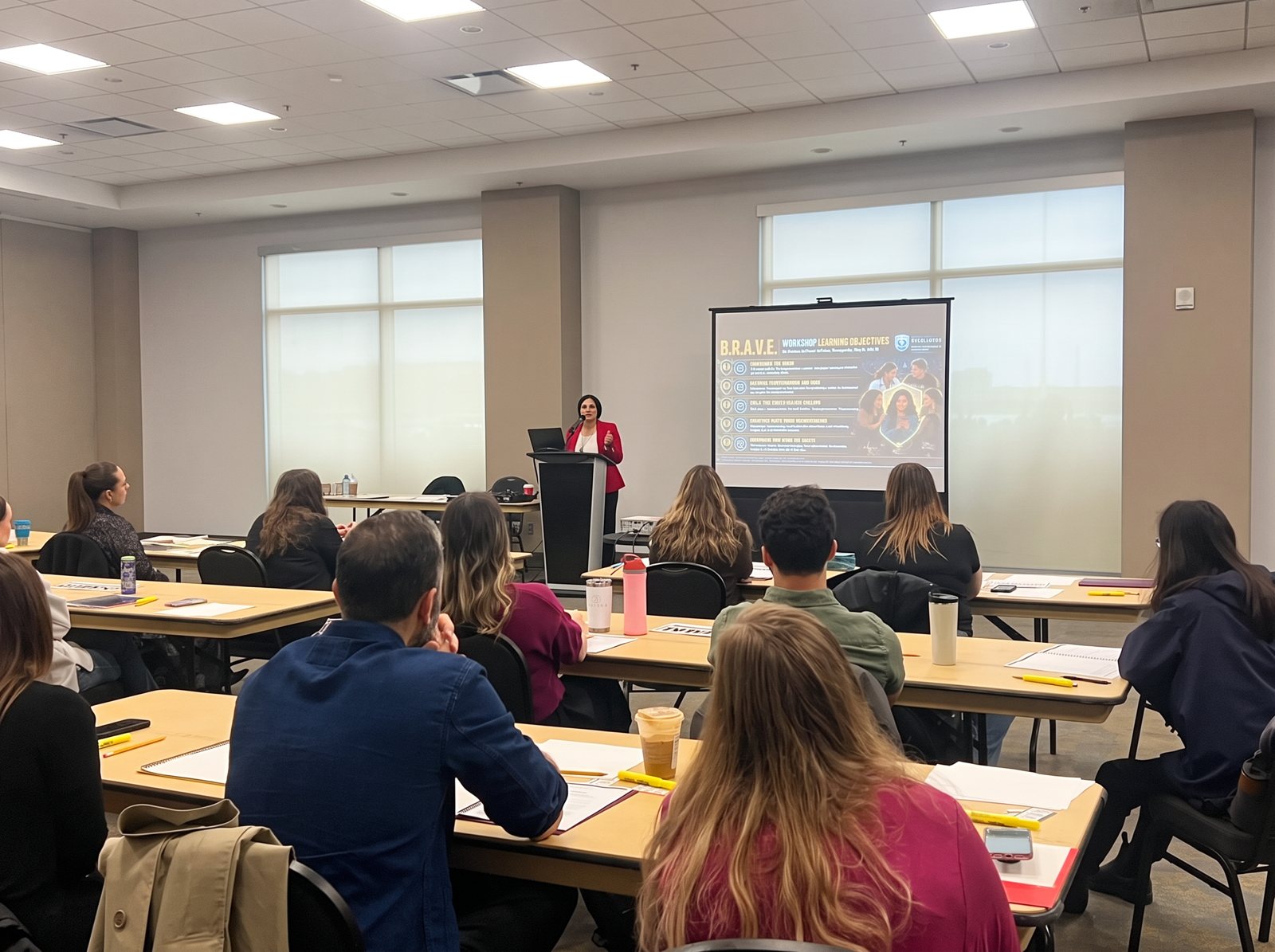

In October 2026, B.R.A.V.E.™ was delivered in Ottawa as an applied IPV and coercive-control workshop involving frontline victim-service professionals. The session included coercive-control pattern recognition, survivor presentation, case analysis, documentation, post-separation dynamics and practical frontline response.
Results are based on 18 participant evaluation forms from the October 2, 2026 workshop and are reported in aggregate. Percentages are rounded. They reflect respondents’ self-reported experiences, not organizational endorsement or independently measured practice outcomes. Item-specific denominators are shown where an answer was unclear or missing.
See full workshop outcomes →Physicians • Nurses • Paramedics • Allied health
Psychotherapists • Psychologists • Social workers
Lawyers • Mediators • Family-law professionals
Shelters • Settlement organizations • Community agencies
Departments • Municipal organizations • Public agencies
Raquel Soteldo is a Registered Psychotherapist whose clinical and professional education work focuses on intimate partner violence, coercive control, narcissistic-abuse dynamics, post-separation abuse and complex relational trauma.
She provides professional education and consultation to frontline and interdisciplinary organizations and is the developer of the B.R.A.V.E.™ Framework for IPV and Coercive Control.
Learn more about Raquel