
If you find yourself repeating painful relationship patterns, struggling with closeness, or feeling unsafe even in healthy connections, attachment-based therapy can help you understand why—and how to change those patterns safely.
Attachment patterns are not flaws. They are adaptive responses shaped by early relationships and later experiences, including narcissistic abuse, emotional neglect, and high-conflict dynamics.
Attachment-based therapy helps adults heal these wounds at the root.
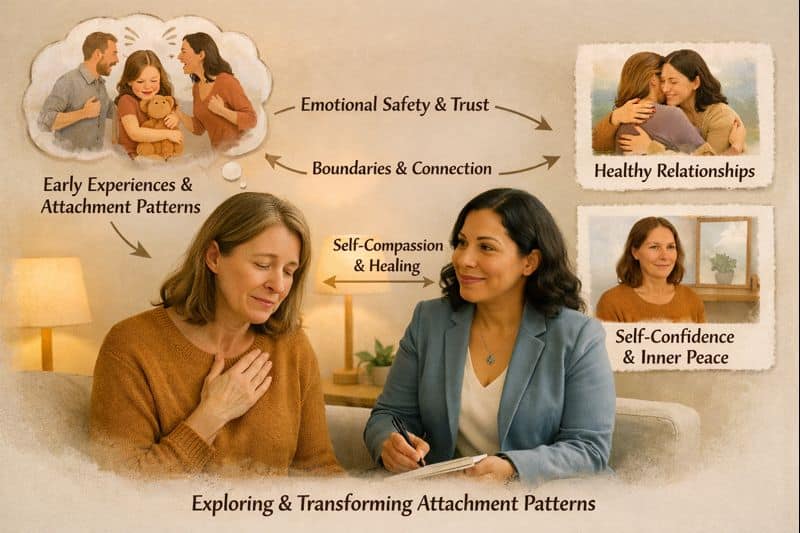
Attachment-based therapy focuses on how early relational experiences shape emotional safety, trust, boundaries, and connection in adulthood. These patterns develop as adaptations to the relationships and environments we’ve lived in — not as personal flaws.
Therapy explores how attachment patterns influence emotional regulation, intimacy, conflict responses, and self-trust, supporting change at a pace that feels safe and grounded.
Many adults develop attachment patterns that influence how they relate to others, especially in close or emotionally significant relationships. These patterns are not conscious choices — they are adaptive responses shaped by early experiences and reinforced over time.
These patterns are especially common in survivors of narcissistic abuse.


Narcissistic relationships — whether with parents, partners, or other close figures — often disrupt a person’s sense of emotional safety. Love, approval, and connection may feel conditional, unpredictable, or tied to performance.
Over time, this can create attachment wounds where closeness and threat become intertwined. Survivors may long for connection while simultaneously feeling unsafe, hypervigilant, or emotionally guarded within relationships.
Attachment-based therapy helps survivors understand these patterns without judgment, blame, or pressure — supporting healing at a pace that feels safe and regulated.
Learn more about trauma-informed support for survivors of narcissistic abuse.
If you’re not sure where to begin, you can start here.
Attachment-based therapy focuses on creating emotional safety within the therapeutic relationship. Rather than pushing for insight or change, therapy moves at a pace that supports regulation, trust, and stability.
Attachment-based therapy supports healing by:
Healing happens within relationship, not in isolation.


Attachment-based therapy is especially helpful for adults who notice recurring patterns in relationships or feel emotionally unsafe even when they want closeness.
Attachment-based therapy may be a good fit if you:
You may also benefit from broader trauma-informed support for adults.
Different survivors need different forms of support, depending on where they are in their healing.
Yes. Attachment-based therapy integrates trauma awareness, nervous system safety, and careful pacing. Sessions focus on creating emotional safety rather than pushing for insight or change before you’re ready.
Yes. Attachment patterns are not fixed. With consistent, supportive therapeutic relationships, many adults experience meaningful changes in how they relate to themselves and others over time.
No. You don’t need to label your experiences or understand attachment theory before beginning. Therapy focuses on noticing patterns safely as they emerge, rather than fitting yourself into a category.
Attachment-based therapy offers a supportive space to understand your patterns, rebuild trust, and move toward relationships that feel safer and more grounded.