
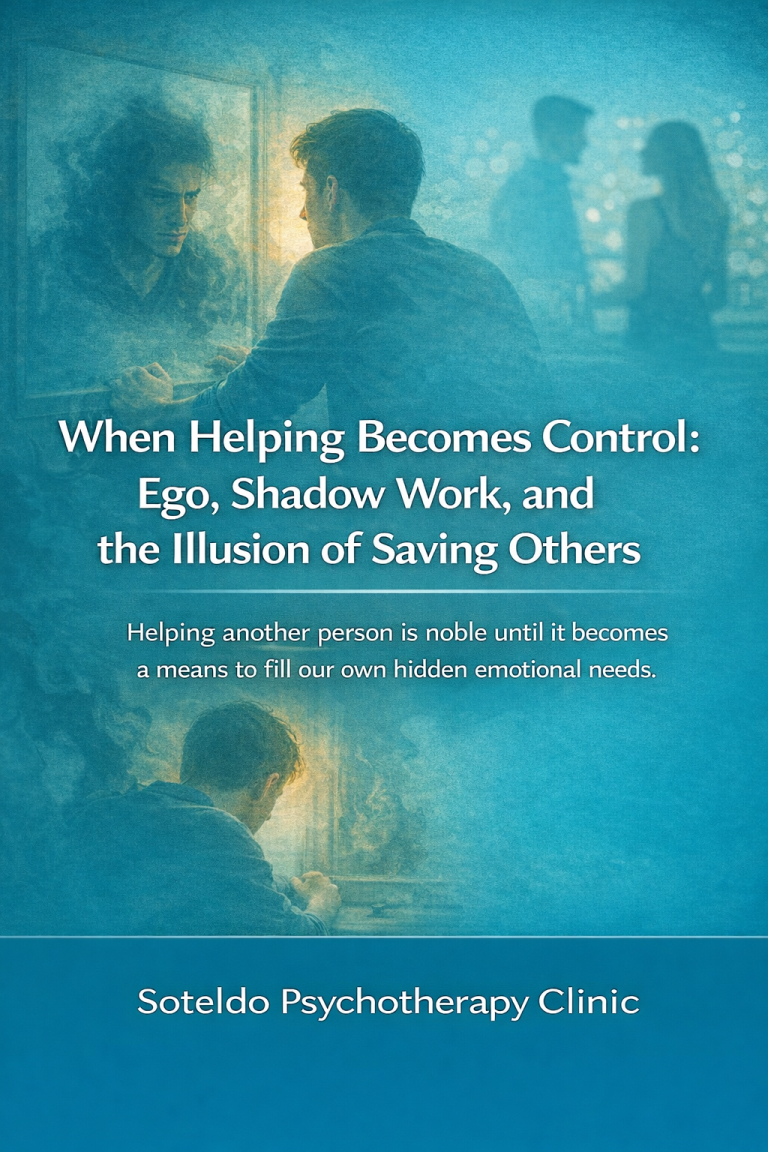
When helping becomes control, it often hides beneath the appearance of love, compassion, or emotional maturity. People widely praise helping others. However, the belief that we can save or change another person often masks deeper emotional needs. What looks like care on the surface can quietly cross into control—especially when helping comes from unmet needs rather than genuine respect for another person’s autonomy.
This isn’t about blame.
It’s about awareness.
When Helping Regulates the Self
The urge to fix others often has little to do with the other person.
Helping can provide a sense of purpose, usefulness, or stability—especially for those who carry unresolved insecurity or fear of abandonment. When internal safety feels fragile, stepping into the role of helper can create temporary relief.
Being needed can feel grounding.
Being indispensable can feel like connection.
But when helping regulates your sense of worth, the relationship quietly shifts out of balance.
The Shadow Side of Saving
Carl Jung described the shadow as the parts of ourselves we disown or push away.
Needs for control, validation, or superiority don’t disappear when they’re denied—they simply find indirect expression. In relationships, they can surface through rescuing, fixing, or positioning oneself as the one who knows better.
Saving someone can unconsciously serve the ego:
- It can create a sense of power
- It can protect against feeling helpless
- It can reinforce identity through usefulness
None of this means someone is “bad.”
It means something inside hasn’t been fully acknowledged.
When Care Crosses Into Control
Healthy help respects autonomy.
When attempts to change or rescue another adult override their agency, boundaries blur. What’s framed as care can limit growth and reinforce dependency—keeping one person in the role of helper and the other in the role of needing help.
This dynamic often operates quietly.
Control doesn’t always look dominant.
Sometimes it looks like emotional investment, advice, or constant involvement.
Why Letting Go Feels So Hard
Helping activates powerful reward systems in the body.
Caregiving releases chemicals that soothe anxiety and create a sense of closeness. For those with attachment insecurity, this relief can be especially reinforcing—making the pattern hard to break even when it becomes draining.
The cost shows up later:
- Emotional exhaustion
- Resentment
- Loss of self-connection
- Relationships built on imbalance
Saving may feel loving in the moment, but it often prevents true intimacy from forming.
Turning the Focus Inward
Healing begins with curiosity rather than judgment.
When you pause and ask why you feel compelled to save, something shifts. Helping stops being automatic and becomes a choice. Awareness loosens the grip of unconscious motives.
This is where shadow work becomes essential—not to shame, but to integrate.
When uncomfortable truths are acknowledged, they lose their power.
From Ego to Authentic Care
True care does not require control.
Love that respects autonomy allows others to face their own growth while you remain responsible for your inner world. It doesn’t rush in to fix. It doesn’t manage outcomes. It trusts that each person is capable.
When helping is no longer about regulating yourself, relationships become lighter, clearer, and more reciprocal.
Healing Isn’t About Saving
Healing doesn’t begin with changing others.
It begins with examining your motives, integrating the parts of yourself you’ve avoided, and cultivating self-awareness. From that place, connection becomes honest rather than performative.
You don’t need to save anyone to be worthy of love.
Authentic connection grows when responsibility is shared—and autonomy is honored.
