
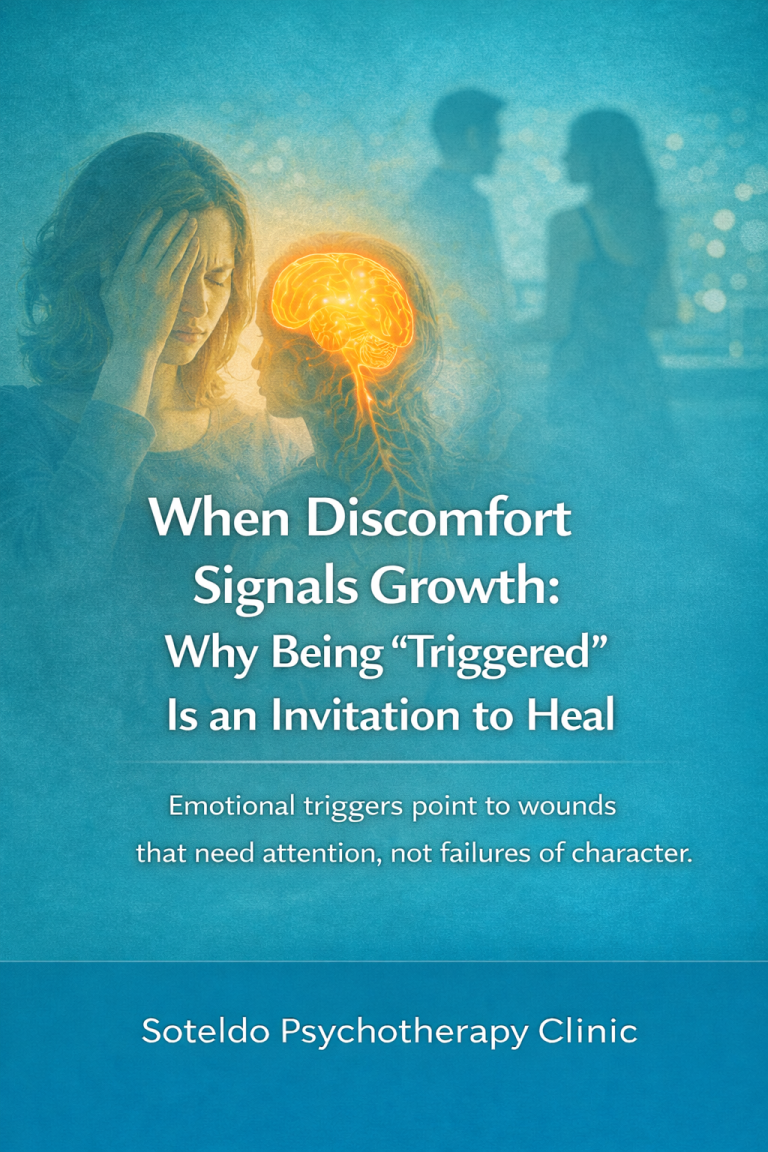
Being triggered by words like selfish, controlling, or manipulative can sting.
Because these words carry weight, they often feel like personal attacks—especially when you’re trying to care, help, or do the right thing. As a result, the instinctive response is usually to defend, explain, or shut down.
However, discomfort itself isn’t the problem.
Avoiding it is.
Why Being Triggered Feels So Intense
When feedback feels threatening, the nervous system reacts automatically.
Your body doesn’t pause to analyze intent—it reacts as if danger is present. This response is rooted in survival, not logic. For those with relational trauma, criticism can echo earlier experiences of rejection, shame, or emotional harm.
The reaction often happens before conscious thought:
- Defensiveness
- Tightness in the body
- Emotional shutdown
- Urges to justify or withdraw
None of this means you’ve done something wrong.
It means your nervous system has been activated.
Triggers Aren’t Random
Emotional reactions don’t come out of nowhere.
Strong responses often point to places inside us that haven’t yet been fully acknowledged. Being triggered can reveal fears of being unlovable, inadequate, or unsafe without control or effort.
Rather than signaling failure, discomfort often highlights unmet needs or unresolved attachment wounds. It shows you where attention—not judgment—is needed.
Turning Inward Instead of Defending
Growth begins when the focus shifts inward.
Instead of asking, Why are they saying this?
The more helpful question becomes, What is this bringing up for me?
Pausing to reflect creates space between reaction and response. This space allows awareness to replace reactivity and opens the door to healthier relational patterns.
It’s not about blaming yourself.
It’s about listening.
Why Self-Compassion Matters
Discomfort only becomes transformative when met with compassion.
Harsh self-judgment tends to intensify shame and avoidance. It keeps the nervous system stuck in defense. Compassion, on the other hand, creates safety—making it possible to stay present with what’s uncomfortable.
When discomfort is treated as information rather than an indictment, deeper questions emerge:
- What am I protecting here?
- What feels unsafe right now?
- What do I actually need?
These questions move you closer to healing, not away from it.
Discomfort as a Signal, Not a Verdict
Trauma often fragments awareness.
Without reflection, behaviors repeat automatically, driven by old patterns rather than present-day choice. Discomfort acts as a signal—an internal cue that something needs attention, integration, or care.
When bodily sensations, emotions, and reflection come back into alignment, understanding deepens. The nervous system begins to settle.
From Reactivity to Regulation
Being triggered isn’t a character flaw.
It’s a sign of activation.
Growth happens when you resist the urge to explain, justify, or defend—and instead stay curious. Listening inward allows the nervous system to move from reactivity into regulation.
You don’t need to be perfect.
You need to be honest.
Healing Begins With Staying Present
Healing doesn’t require eliminating discomfort.
It requires the willingness to stay with it long enough to learn from it.
When emotional reactions are treated as invitations rather than attacks, self-awareness deepens. Patterns loosen. Choice returns.
Discomfort becomes a doorway—not something to fear, but something that guides you toward deeper understanding and meaningful change.
