
Introduction
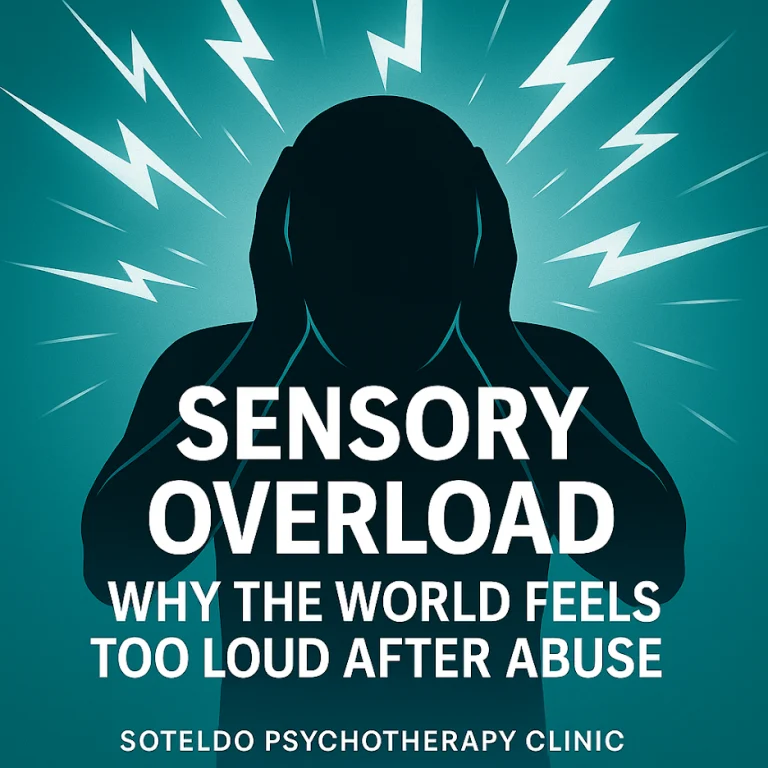
A common but often misunderstood experience among survivors of narcissistic abuse is sensory overload. Clients frequently describe the world as “too loud, too bright, or too much.” Crowded grocery stores, busy traffic, or even family gatherings may feel unbearable. Some survivors avoid environments they once enjoyed, interpreting their new sensitivities as weakness or fragility.
For psychotherapists, it is critical to recognize sensory overload not as a flaw but as a trauma response. By understanding the neurological underpinnings and clinical implications, therapists can validate this experience and provide strategies to support survivors in regaining comfort and control.
The Science of Sensory Overload in Trauma
Hypervigilance and the Nervous System
During narcissistic abuse, survivors live in prolonged states of hypervigilance. Their nervous systems remain primed to detect danger—listening for footsteps, analyzing tone of voice, or watching for subtle shifts in body language. This survival state recalibrates sensory thresholds, making ordinary stimuli (bright light, background chatter, or sudden noises) feel overwhelming.
The Role of the Amygdala and Cortex
Neuroscience research shows that trauma heightens amygdala activity while impairing the prefrontal cortex’s regulation. The result is exaggerated responses to neutral stimuli. What another person’s brain filters out as harmless noise, the survivor’s brain interprets as a potential threat. This explains why survivors often feel “on edge” in environments that should feel neutral or even enjoyable.
Clinical Presentation of Sensory Overload
Therapists may notice survivors describing:
• Feeling drained after shopping, commuting, or socializing.
• Avoiding restaurants, concerts, or even busy offices.
• Heightened startle reflex in response to sudden sounds.
• Irritability or shutdown when overstimulated.
Importantly, survivors often carry shame about this sensitivity, worrying they are “too fragile” or “crazy.” Recognizing sensory overload as trauma physiology, not personal weakness, is essential for effective treatment.
Therapy Focus: Supporting Survivors with Sensory Overload
1. Normalize and Validate
The first intervention is validation. Survivors often breathe a sigh of relief when told: “Your sensitivity is a normal trauma response. Your nervous system is trying to protect you.” Normalization removes layers of shame and reframes the experience as resilience, not weakness.
2. Psychoeducation on the Nervous System
Teaching clients about hypervigilance, the amygdala, and the “window of tolerance” helps them contextualize their experience. Survivors who understand the biology behind sensory overload are less likely to judge themselves harshly.
3. Grounding and Regulation Tools
Grounding practices help survivors regulate in overstimulating environments. Techniques may include:
• Sensory grounding: focusing on one calming sense (e.g., touch a grounding object).
• Breathwork: slow exhalations to signal safety to the nervous system.
• Micro-breaks: stepping outside, closing eyes, or using noise-canceling headphones.
4. Gradual Exposure at the Survivor’s Pace
Avoidance is protective but can become restrictive. Therapists can gently guide survivors in reintroducing environments at a manageable pace. For example, visiting a store for 5 minutes, then leaving, gradually increasing tolerance. This must always be survivor-led, not therapist-driven.
5. Somatic Interventions
Body-based therapies like Somatic Experiencing or polyvagal-informed work support nervous system recalibration. Helping survivors notice and release tension builds resilience in handling sensory input.
Case Example (Fictionalized)
Lena, a 29-year-old survivor, reported that she couldn’t tolerate grocery shopping without panic. The lights felt blinding, and the noise unbearable. She began ordering delivery to avoid leaving home. In therapy, we validated her experience as a trauma response. We introduced grounding techniques—such as carrying a grounding stone and practicing slow exhalations. Over time, Lena gradually reintroduced short store visits. With education and practice, she reframed her sensitivity as her body’s survival mechanism, not personal weakness. Today, Lena shops independently again, using tools when needed.
Therapist Pitfalls to Avoid
• Minimizing the client’s experience. Saying “It’s just a store, you’ll be fine” invalidates their reality.
• Rushing exposure. Pushing survivors too quickly risks retraumatization and reinforces avoidance.
• Over-pathologizing sensitivity. Survivors benefit from learning their heightened awareness is adaptive, not defective.
Conclusion
For psychotherapists, sensory overload is an important trauma symptom to recognize. Survivors of narcissistic abuse often feel the world is “too much” because their nervous systems were conditioned to stay on high alert. With validation, psychoeducation, grounding tools, and gradual exposure, survivors can retrain their systems and reclaim peace in everyday environments.
👉 At Soteldo Psychotherapy Clinic, we affirm that sensitivity is not fragility—it is resilience in disguise. With skilled support, survivors can learn to live fully again without fear of sensory overwhelm.
