
Introduction
One of the most puzzling symptoms survivors of narcissistic abuse bring into therapy is the collapse response. Clients often say: “I feel like I’m going full speed, and then suddenly I crash,” or “I can’t sustain my energy. I feel lazy or broken.” To the untrained eye, this cycle looks like mood instability or lack of discipline. In reality, it is a nervous system survival pattern.
For psychotherapists, recognizing the collapse response is vital. This pattern is not resistance or laziness—it is trauma physiology. Understanding it allows therapists to normalize the client’s experience, reduce shame, and introduce regulation strategies that promote balance.
What Is the Collapse Response?
The Nervous System in Trauma
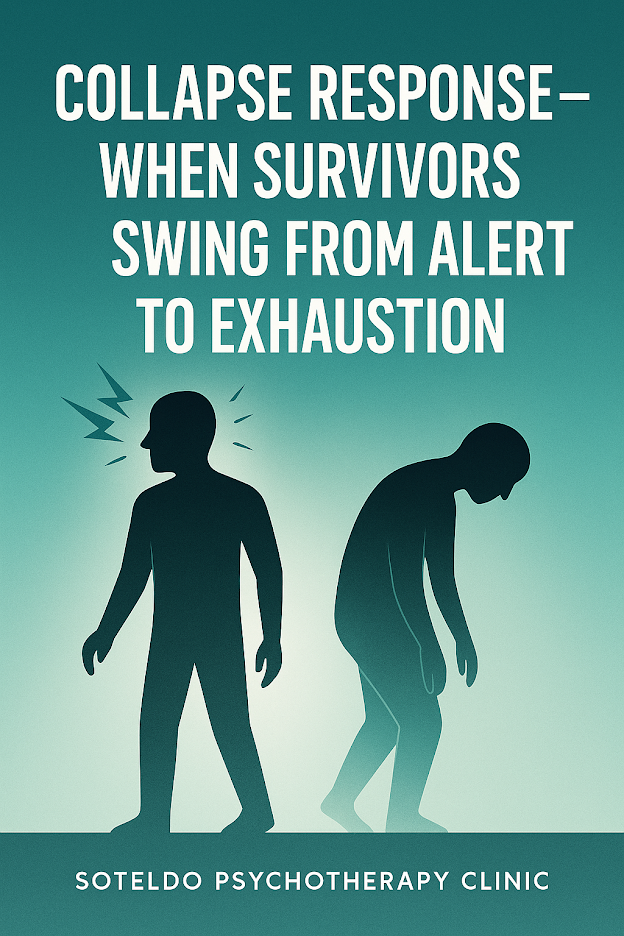
Survivors of narcissistic abuse often live for years in hypervigilance. The nervous system cycles between fight-or-flight activation and eventual freeze or collapse when the body can no longer sustain high alert. This pendulum swing is the collapse response: bursts of energy and productivity, followed by sudden exhaustion.
Why It Happens
From a trauma-informed perspective, collapse is protective. The body shuts down to conserve energy and prevent overwhelm. While this feels frustrating for survivors, it is a sign of survival, not weakness. Many describe it as if their body “betrays” them, but in reality, the nervous system is keeping them safe in the only way it knows how.
Clinical Presentation of Collapse in Survivors
Therapists may notice patterns such as:
• Clients pushing themselves into hyper-productivity, then suddenly canceling sessions due to exhaustion.
• Survivors describing cycles of hope and motivation followed by despair and fatigue.
• Feelings of self-blame: “Why can’t I keep it together like everyone else?”
Understanding collapse prevents misdiagnosis of depression or resistance. It is not a refusal to engage—it is a nervous system overwhelmed by trauma.
Therapy Focus: Interventions for Collapse Response
1. Psychoeducation
The first therapeutic step is helping survivors understand that collapse is a biological trauma response. Explaining the role of the autonomic nervous system reduces shame. Clients often feel enormous relief when they learn: “You are not lazy; your nervous system is protecting you.”
2. Grounding and Regulation Practices
Grounding techniques help survivors notice when they are edging toward collapse. Simple interventions like naming five things they can see, or focusing on the breath, bring awareness back to the present moment. Somatic regulation tools, such as shaking out tension or gentle stretching, support the body in moving through activation without shutting down.
3. Pacing and Energy Awareness
Survivors benefit from pacing strategies—breaking tasks into smaller parts, scheduling rest breaks, and avoiding the “all-or-nothing” trap. Therapists can work with clients to design rhythms of activity and rest that align with their nervous system’s current capacity.
4. Reframing Collapse as Survival
Therapists should encourage survivors to view collapse as evidence of resilience. Their body found a way to endure chronic stress. Reframing collapse as a protective reflex helps clients shift from shame to self-compassion.
5. Somatic Therapies
Body-based approaches such as Sensorimotor Psychotherapy, Somatic Experiencing, or polyvagal-informed interventions are particularly effective. These modalities focus on releasing stored activation, widening the “window of tolerance,” and stabilizing the nervous system.
Case Example (Fictionalized)
James, a 35-year-old survivor of workplace narcissistic abuse, described feeling “unstoppable” during the week, working late and overachieving, only to spend weekends in bed. He believed he was failing. In therapy, we explored the collapse response. Through psychoeducation, James learned that his weekend “shutdowns” were not laziness but survival. By integrating pacing strategies and grounding rituals, he gradually stabilized his energy and released self-blame.
This case demonstrates how shifting the meaning of collapse transforms despair into empowerment.
Therapist Pitfalls to Avoid
• Pathologizing collapse as resistance or non-compliance. Survivors already carry guilt; framing collapse as failure reinforces shame.
• Pushing survivors to override collapse. Encouraging them to “push through” risks retraumatization and burnout.
• Ignoring the body. Collapse is physiological, not just cognitive. Talk therapy alone may be insufficient without somatic support.
Conclusion
For psychotherapists, recognizing the collapse response is crucial. Survivors of narcissistic abuse are not lazy or broken—they are living in bodies that learned to survive cycles of stress. With psychoeducation, pacing, and nervous system regulation, clients can learn to ride the waves of collapse with compassion and eventually stabilize their energy.
👉 At Soteldo Psychotherapy Clinic, we help survivors regulate their energy, balance their nervous system, and rebuild a steadier rhythm of living after trauma.
