
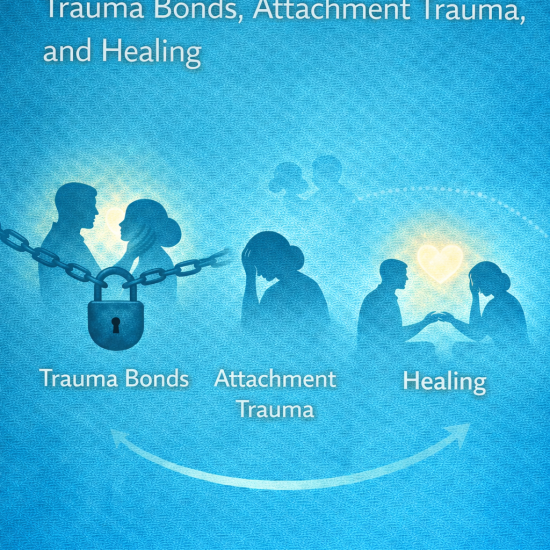
Recovering from narcissistic abuse can be a complex emotional process. Survivors often report experiencing confusion, anxiety, emotional exhaustion, and difficulty trusting others long after the relationship has ended. These reactions are not uncommon. Narcissistic abuse frequently involves psychological manipulation, emotional instability, and cycles of affection and harm that can disrupt a person’s sense of safety and identity.
Understanding the psychological dynamics involved in narcissistic abuse—including trauma bonds and attachment trauma—can help survivors make sense of their experiences and begin the process of healing. With appropriate support and therapeutic guidance, individuals can rebuild emotional safety, restore self-trust, and develop healthier relational patterns.
If you are seeking support, you can learn more about narcissistic abuse recovery therapy and how trauma-informed psychotherapy can help survivors rebuild emotional safety and self-trust.
Definition
Narcissistic abuse is a pattern of emotional manipulation and psychological control used by individuals with narcissistic traits. Recovery involves healing trauma bonds, repairing attachment disruptions, and rebuilding emotional safety.
What is narcissistic abuse recovery?
Narcissistic abuse recovery refers to the emotional and psychological healing process that occurs after leaving a narcissistically abusive relationship. Recovery often involves understanding trauma bonds, healing attachment trauma, rebuilding self-trust, and developing healthier relational boundaries.
Understanding Narcissistic Abuse
Narcissistic abuse refers to patterns of emotional manipulation, psychological control, and relational instability used by individuals with narcissistic traits (Campbell & Miller, 2011). These relationships often involve behaviors such as gaslighting, blame shifting, emotional withdrawal, and intermittent affection.
Because narcissistic relationships frequently alternate between affection and emotional harm, survivors may feel deeply attached to the partner despite experiencing distress. These dynamics can lead to trauma bonding and attachment disruptions that make leaving the relationship particularly challenging.
Many narcissistic relationships also follow a predictable relational pattern known as the narcissistic abuse cycle, which often includes idealization, devaluation, and discard.
Trauma Bonds in Narcissistic Relationships
One of the most powerful psychological mechanisms involved in narcissistic abuse is the development of trauma bonds. Trauma bonds occur when cycles of emotional harm and intermittent affection create strong emotional attachments between the victim and the abusive partner.
Trauma bonding often develops through intermittent reinforcement, a process in which unpredictable rewards strengthen behavioral patterns (Carnes, 2019). In narcissistic relationships, moments of affection or reconciliation may follow periods of criticism or emotional withdrawal, reinforcing the emotional attachment.
As a result, survivors may feel hopeful that the relationship will return to the earlier stage of affection, even when the overall pattern remains harmful. You can learn more about trauma bonds in abusive relationships and why victims stay in narcissistic relationships in the related articles below.
Attachment Trauma After Narcissistic Abuse
Attachment theory provides an important framework for understanding the emotional impact of narcissistic abuse. According to Bowlby (1988), humans are biologically predisposed to seek safety and emotional regulation through attachment relationships.
When an attachment figure becomes a source of distress rather than safety, the attachment system can become highly activated. Survivors may experience intense anxiety, emotional dependency, or fear of abandonment.
Individuals with anxious or disorganized attachment patterns may be particularly vulnerable to trauma bonding because their attachment systems are highly sensitive to relational instability (Mikulincer & Shaver, 2016). You can also explore healing attachment trauma after narcissistic abuse and attachment styles and narcissistic abuse for a deeper understanding of these dynamics.
Psychological Effects of Narcissistic Abuse
Survivors of narcissistic abuse frequently experience a range of emotional and cognitive reactions. These responses often reflect the brain’s attempt to process relational trauma and psychological manipulation.
Common psychological effects include:
- anxiety and emotional distress
- confusion about past events
- diminished self-esteem
- difficulty trusting others
- rumination about the relationship
- hypervigilance in new relationships
Gaslighting and psychological manipulation can further complicate recovery by causing survivors to question their own perceptions of reality (Sweet, 2019). Many individuals also experience symptoms associated with post-narcissistic abuse syndrome, including self-doubt, emotional dysregulation, and persistent confusion.
Case Example of Narcissistic Abuse Recovery
Consider the experience of “Maria,” a 35-year-old professional who sought therapy after leaving a long-term relationship with a narcissistic partner. In the early stages of the relationship, Maria described feeling deeply admired and emotionally connected. Her partner frequently expressed affection and spoke about a shared future.
Over time, however, the relationship became increasingly unstable. Maria’s partner alternated between affection and criticism, often blaming her for conflicts. When Maria attempted to address these concerns, her partner dismissed her feelings and accused her of being overly sensitive.
Even after the relationship ended, Maria found herself thinking frequently about her former partner and questioning whether she had misunderstood the relationship. Through therapy, she began to understand that the relationship involved patterns of trauma bonding and attachment disruption. This insight helped her regain clarity and begin rebuilding her sense of identity and emotional independence.
Stages of Recovery After Narcissistic Abuse
Recovery from narcissistic abuse often involves multiple stages of healing. Survivors may benefit from developing a deeper understanding of abuse dynamics and rebuilding emotional safety.
Important aspects of recovery may include:
- learning about narcissistic abuse patterns
- recognizing trauma bonds
- establishing emotional and relational boundaries
- reconnecting with supportive relationships
- rebuilding personal identity and self-trust
Education about narcissistic abuse can help survivors reduce self-blame and reinterpret past experiences with greater clarity.
Therapeutic Approaches for Healing
Several therapeutic approaches may support recovery from narcissistic abuse.
Trauma-Informed Psychotherapy
Trauma-informed therapy focuses on restoring emotional safety and helping individuals process traumatic experiences.
Attachment-Focused Therapy
Attachment-based approaches help individuals understand how relational patterns influence emotional responses and relationship expectations.
Cognitive Restructuring
Cognitive approaches can help survivors challenge self-blaming beliefs and rebuild confidence in their perceptions.
Emotional Regulation Skills
Developing emotional regulation skills can help individuals manage anxiety and emotional triggers associated with past relational trauma.
For survivors whose self-trust has been affected by manipulation, it may also be helpful to explore gaslighting in narcissistic relationships and how those tactics influence confidence and emotional clarity.
Rebuilding Healthy Relationships
As recovery progresses, survivors often begin to rebuild healthier relational patterns. This process may involve developing stronger boundaries, increasing self-awareness, and cultivating relationships based on mutual respect and emotional safety.
Rebuilding trust in relationships can take time, but many survivors report experiencing increased resilience and emotional clarity as they move through the recovery process.
Recognizing 10 signs you are in a narcissistic relationship can also help individuals identify unhealthy dynamics earlier in future relationships.
Moving Forward After Narcissistic Abuse
Healing after narcissistic abuse does not mean forgetting what happened. Instead, it often involves making sense of past relational trauma, strengthening internal safety, and building healthier expectations for future relationships.
Recovery is not always linear. However, with appropriate support, many survivors gradually move from confusion and emotional dependency toward greater clarity, resilience, and emotional independence.
Conclusion
Narcissistic abuse can have profound emotional and psychological effects, particularly when trauma bonds and attachment trauma develop within the relationship. Survivors may struggle with confusion, emotional distress, and difficulty trusting others as they process their experiences.
However, recovery is possible. By understanding the dynamics of narcissistic abuse and engaging in therapeutic healing processes, individuals can rebuild self-trust, establish healthy relational boundaries, and develop more secure relationships in the future.
FAQ
What is narcissistic abuse recovery?
Narcissistic abuse recovery is the process of healing from emotional manipulation, trauma bonds, and attachment disruptions caused by narcissistic relationships.
Why is it difficult to recover from narcissistic abuse?
Recovery can be challenging because trauma bonds and attachment trauma create strong emotional ties that persist even after the relationship ends.
Can therapy help survivors of narcissistic abuse?
Yes. Trauma-informed psychotherapy and attachment-focused therapy can help survivors rebuild emotional safety and self-trust.
How long does narcissistic abuse recovery take?
Recovery timelines vary, but many individuals experience gradual improvement as they rebuild boundaries, process trauma, and develop healthier relationships.
Seeking Support After Narcissistic Abuse
Healing from narcissistic abuse often requires compassionate support and professional guidance. Therapy can help survivors understand trauma bonds, rebuild emotional safety, and develop healthier relationship patterns.
Working with a trained psychotherapist can support individuals in moving from confusion and emotional instability toward greater clarity, emotional safety, and relational healing.
References
Bowlby, J. (1988). A secure base: Parent-child attachment and healthy human development. Basic Books.
Campbell, W. K., & Miller, J. D. (2011). The handbook of narcissism and narcissistic personality disorder: Theoretical approaches, empirical findings, and treatments. Wiley.
Carnes, P. (2019). The betrayal bond: Breaking free of exploitive relationships (3rd ed.). Health Communications.
Mikulincer, M., & Shaver, P. R. (2016). Attachment in adulthood: Structure, dynamics, and change (2nd ed.). Guilford Press.
Sweet, P. L. (2019). The sociology of gaslighting. American Sociological Review, 84(5), 851–875.
