
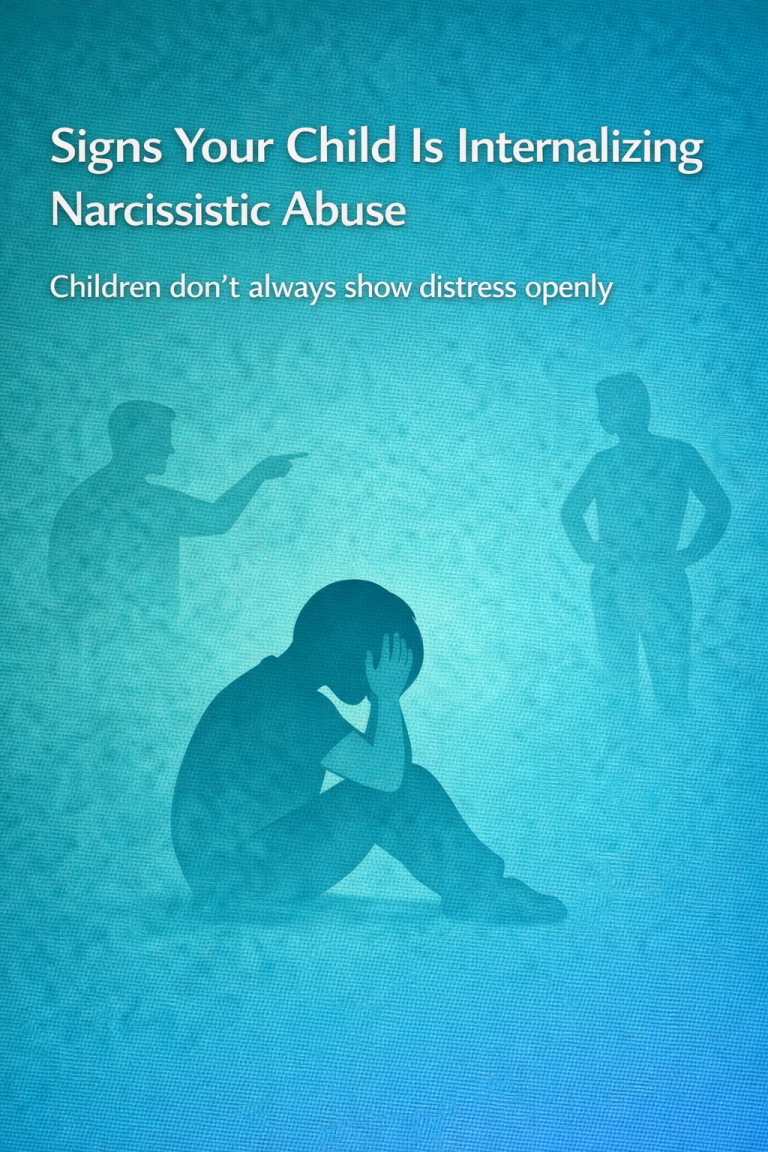
Children don’t always show distress openly
Children living in narcissistic abuse or high-conflict family systems may appear “well-behaved” while silently carrying emotional distress. Many internalize abuse, believing they are responsible for relational instability.
Emotional and behavioral signs to watch for
Children may:
- Excessively people-please
- Apologize frequently
- Struggle with self-confidence
- Fear making mistakes
- Become hyper-responsible
- Suppress emotions
These behaviors often reflect adaptation to emotional unpredictability, not personality traits.
How children internalize blame
Narcissistic caregivers often deflect responsibility, causing children to believe:
- They are the problem
- Their needs are selfish
- Love must be earned
Over time, this internalized shame shapes identity.
When support is needed
If a child shows persistent emotional distress, early support can prevent long-term trauma.
Supporting children safely
Intervention does not require confrontation or escalation. Trauma-informed parent coaching helps caregivers respond to children’s distress with clarity, protection, and emotional safety.
This work often focuses on:
- Emotional attunement
- Protective boundaries
- Nervous system regulation
- Repair after emotional rupture
👉 Learn more about Parent Coaching for Survivors of Narcissistic Abuse
If you’re unsure what kind of support fits your child’s needs, you don’t have to decide that right now.
👉 Start here to orient safely and explore support at your own pace
When you’re ready, you can also book a confidential consultation.
