
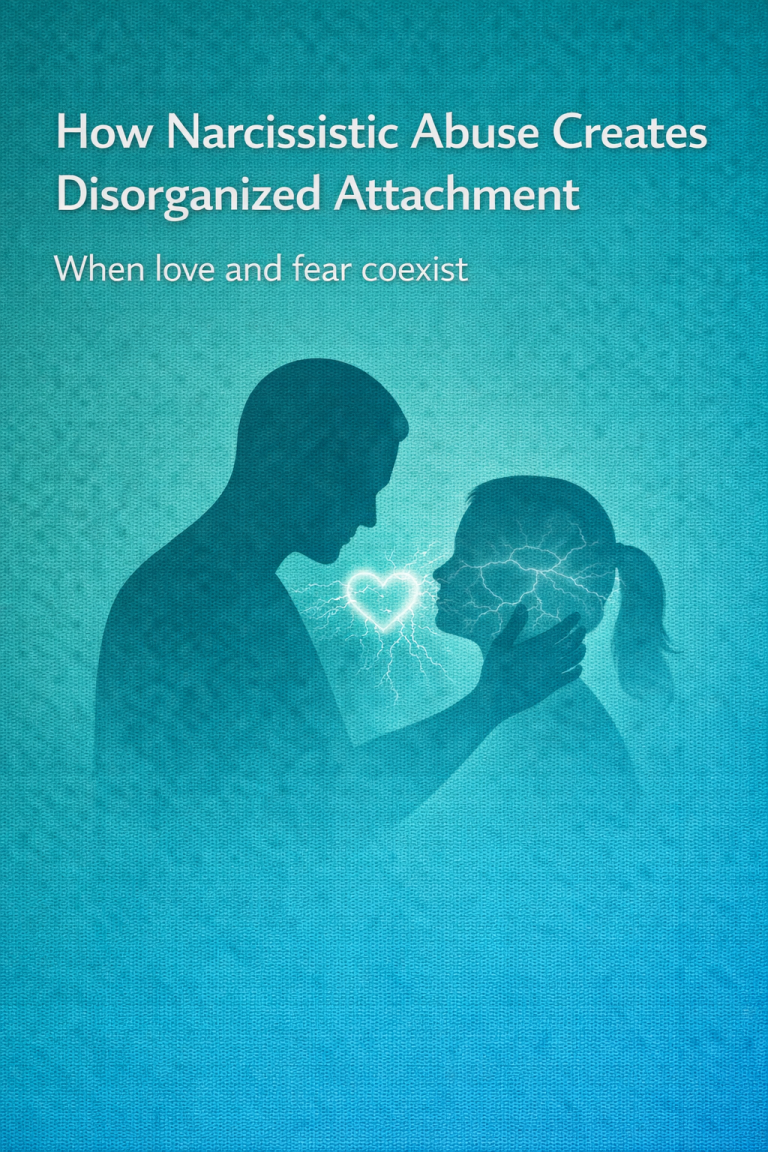
When love and fear coexist
Disorganized attachment forms when the same person is both a source of comfort and a source of fear. This is common in narcissistic abuse, where caregivers or partners alternate between validation and punishment.
This pattern often leads to disorganized attachment, a survival-based attachment style shaped by chronic fear and inconsistency.
Narcissistic parents and attachment trauma
Children of narcissistic parents often experience:
- Conditional love
- Emotional role reversal
- Chronic invalidation
- Punishment for autonomy
This creates confusion and internal conflict around closeness.
Disorganized attachment in adult relationships
Adults with disorganized attachment may:
- Feel drawn to emotionally unavailable partners
- Experience intense fear of abandonment
- Dissociate during conflict
- Alternate between clinging and withdrawal
Trauma bonding and attachment
Disorganized attachment strengthens trauma bonds, making it difficult to leave abusive relationships despite clear harm.
Healing disorganized attachment
Healing disorganized attachment focuses on restoring safety, predictability, and trust in relationships — without forcing closeness or independence before readiness.
This work often includes:
- Establishing emotional safety
- Regulating the nervous system
- Repairing relational expectations
- Developing internal boundaries
👉 Learn more about Attachment-Based Psychotherapy for Adults
If you’re unsure how these patterns apply to your experience, you don’t need to label yourself or decide anything yet.
👉 Start here to orient safely and explore support at your own pace
When you’re ready, you can also book a confidential consultation.
