
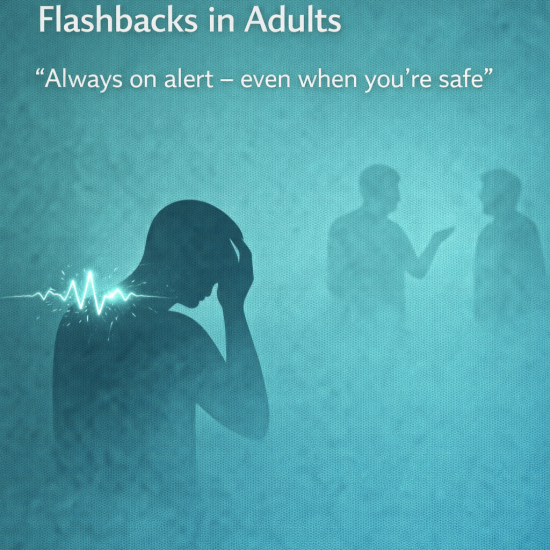
Always on alert — even when you’re safe
Hypervigilance is a state of constant threat monitoring. Many adults describe feeling unable to relax, even in calm environments.
This is a common trauma response, particularly after long-term emotional abuse.
Emotional flashbacks explained
Unlike visual flashbacks, emotional flashbacks involve sudden emotional states such as:
- Fear
- Shame
- Panic
- Hopelessness
They occur without conscious memory, making them confusing and distressing.
Common triggers
Triggers may include:
- Conflict
- Criticism
- Silence
- Authority figures
- Boundary-setting
The link to narcissistic abuse
Narcissistic abuse trains the nervous system to anticipate harm. Hypervigilance becomes a survival adaptation.
Healing hypervigilance in therapy
Hypervigilance and emotional flashbacks are nervous system responses shaped by past threat. Trauma-informed anxiety and PTSD treatment focuses on helping the body recognize safety again while reducing reactivity over time.
This work often includes:
- Nervous system regulation
- Grounding and stabilization tools
- Increased emotional tolerance
- Reduced reactivity to triggers
👉 Learn more about Anxiety and PTSD Treatment Plans
If you’re unsure what these symptoms mean in your own experience, you don’t need to figure that out alone.
👉 Start here to orient safely and explore support at your own pace
When you’re ready, you can also book a confidential consultation.
