
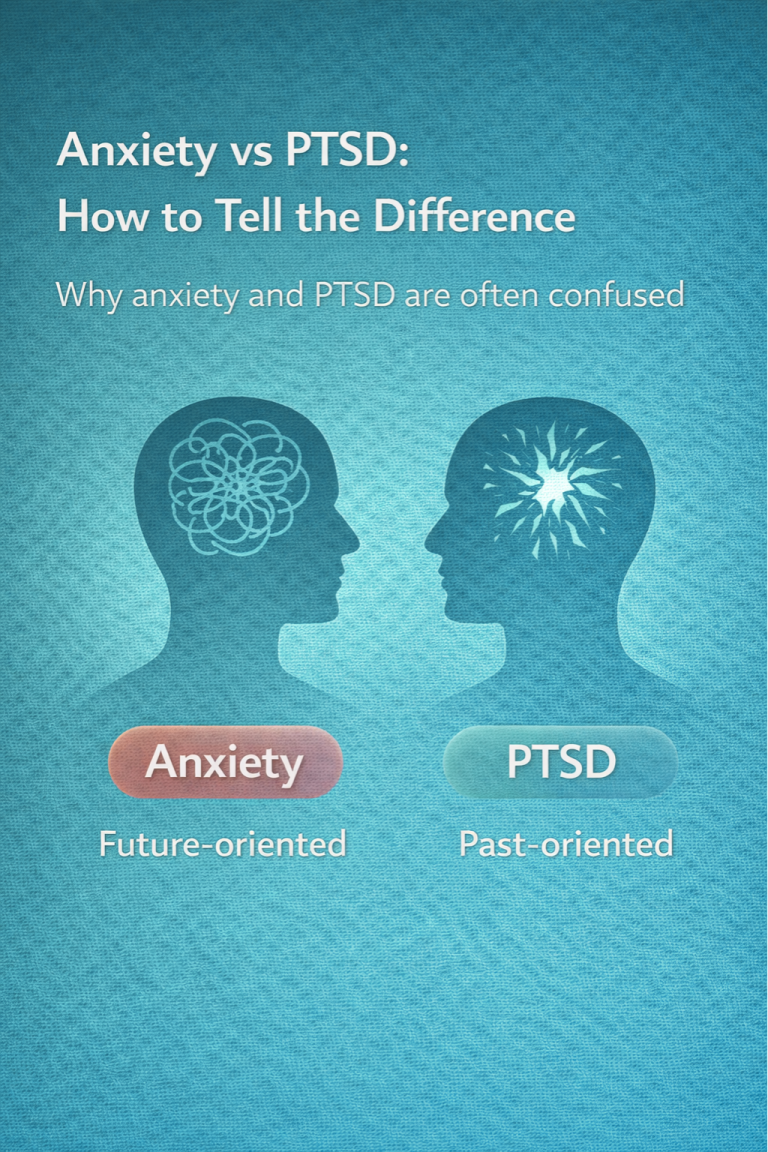
Why anxiety and PTSD are often confused
Anxiety and PTSD share many symptoms — racing thoughts, panic, restlessness, sleep disturbances — yet they are not the same condition.
Understanding the difference is essential for effective treatment.
What anxiety typically looks like
Anxiety disorders often involve:
- Persistent worry
- Anticipatory fear
- Muscle tension
- Difficulty concentrating
- Avoidance of stressors
Anxiety is generally future-oriented, focused on what might go wrong.
What PTSD looks like in adults
PTSD and complex PTSD involve:
- Nervous system hyperarousal
- Emotional flashbacks
- Triggers linked to past experiences
- Avoidance of reminders
- Emotional numbing or dissociation
PTSD is past-oriented, even when the individual isn’t consciously recalling memories.
When anxiety is actually trauma
Many adults diagnosed with anxiety are actually experiencing unresolved trauma — particularly survivors of narcissistic abuse or emotionally unsafe relationships.
Why the distinction matters for treatment
Treating trauma as anxiety can lead to temporary symptom relief without addressing the underlying cause. When symptoms are rooted in trauma, effective support must focus on nervous system regulation, emotional safety, and trauma processing rather than symptom management alone.
Trauma-informed anxiety and PTSD treatment often addresses:
- Nervous system regulation
- Emotional safety
- Trauma-related triggers
- Attachment wounds
- Identity repair
👉 Learn more about Anxiety and PTSD Treatment Plans
If you’re unsure which framework fits your experience, you don’t need to decide that on your own.
👉 Start here to orient safely and explore support at your own pace
When you’re ready, you can also book a confidential consultation.
