
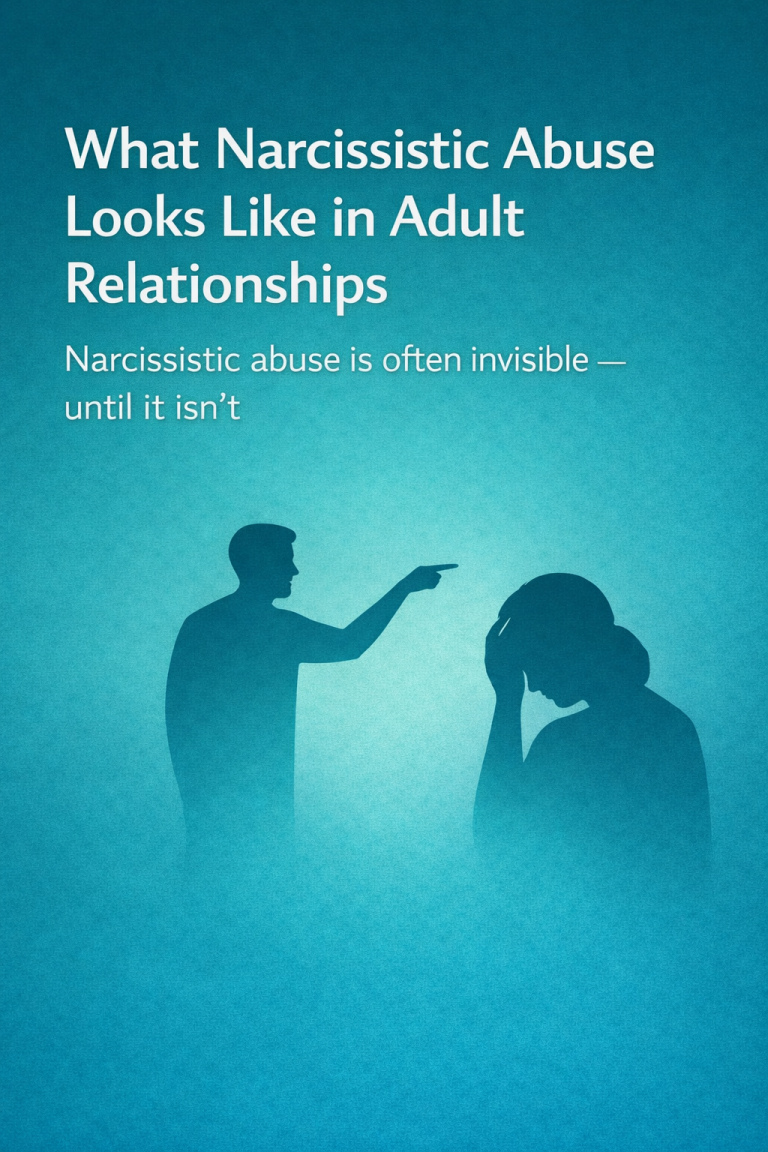
Narcissistic abuse is often invisible — until it isn’t
Many adults enter therapy confused, emotionally exhausted, and questioning their own reality. They may say things like “I feel like I’m the problem” or “I don’t recognize myself anymore.” What they are often describing is narcissistic abuse — a form of emotional and psychological abuse that erodes identity over time.
Unlike physical abuse, narcissistic abuse is subtle, cumulative, and deeply destabilizing. It occurs in romantic relationships, marriages, family systems, and even professional dynamics, leaving survivors doubting their perceptions and struggling to trust themselves.
Covert vs overt narcissistic abuse
Not all narcissistic abuse looks the same.
Overt narcissistic abuse is easier to identify. It includes:
- Verbal aggression or humiliation
- Entitlement and dominance
- Explosive anger when challenged
- Open lack of empathy
Covert narcissistic abuse, however, is far more psychologically damaging and harder to name. It may involve:
- Passive-aggressive behavior
- Chronic invalidation
- Playing the victim
- Subtle gaslighting
- Emotional withdrawal as punishment
Many survivors spend years trying to “fix” themselves, unaware that they are responding to an abusive relational dynamic rather than a personal failing.
Gaslighting and reality distortion
One of the defining features of narcissistic abuse is gaslighting — the systematic manipulation of another person’s perception of reality.
This pattern is common in survivors of narcissistic abuse, which is why narcissistic abuse therapy focuses on helping adults identify abusive dynamics, rebuild self-trust, and restore emotional safety.
Over time, survivors may:
- Question their memory
- Minimize their emotional pain
- Feel confused during conflicts
- Apologize excessively
- Struggle to articulate what feels wrong
This chronic reality distortion often leads to anxiety, depression, and symptoms consistent with trauma responses.
Emotional manipulation and control
Narcissistic abuse frequently involves:
- Intermittent affection followed by withdrawal
- Conditional love
- Silent treatment
- Emotional punishment
- Shifting goalposts
These patterns create trauma bonding, where moments of validation feel intoxicating and separation feels unbearable — even when the relationship is harmful.
The long-term psychological impact
Survivors of narcissistic abuse often experience:
- Chronic anxiety or hypervigilance
- Emotional flashbacks
- Low self-esteem
- Difficulty trusting others
- Attachment insecurity
- Symptoms of C-PTSD
When to seek professional support
If you recognize these patterns in your relationship history, support can be life-changing. Healing from narcissistic abuse is not about “thinking differently” — it requires a trauma-informed, relational approach that understands power, manipulation, and identity erosion.
👉 Learn more about Narcissistic Abuse Recovery Therapy
If you’re not sure how this applies to your situation, you don’t need to decide that right now.
👉 Start here to orient safely and explore support at your own pace
When you’re ready, you can also book a confidential consultation.
