
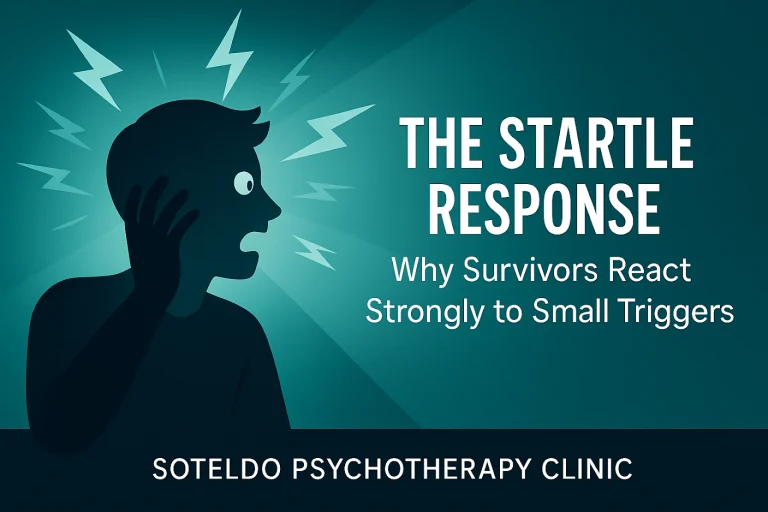
Many survivors describe being “jumpy.” A sudden noise, a door slamming, or even a phone notification can make them flinch or react disproportionately. However, this is not oversensitivity—it is a startle response after narcissistic abuse, a normal trauma reaction that shows how the nervous system learned to stay on guard. As a result, even small triggers can feel overwhelming.
Why It Happens
During narcissistic abuse, the body learns that danger can appear at any moment. Therefore, the nervous system adapts by remaining on high alert. This survival response often lingers long after the abuse ends. In fact, even neutral sounds or gestures can reactivate old fear pathways, leading to what clinicians call an exaggerated startle response. Consequently, survivors may feel anxious or confused by their own strong reactions.
Healing Through Awareness
Therapy helps survivors understand that this startle response is not weakness but evidence of resilience. The body kept them safe by staying alert. By reframing the startle response after narcissistic abuse as survival, survivors reduce shame and begin to honor their body’s wisdom.
Therapy Tools
Grounding exercises, somatic practices, and psychoeducation gradually retrain the body. Survivors learn that safety in the present does not require constant vigilance. Over time, the nervous system recalibrates, and triggers lose their power.
👉 At Soteldo Psychotherapy Clinic, we teach survivors—and the therapists who support them—how to calm trauma responses with compassion and skill.
