
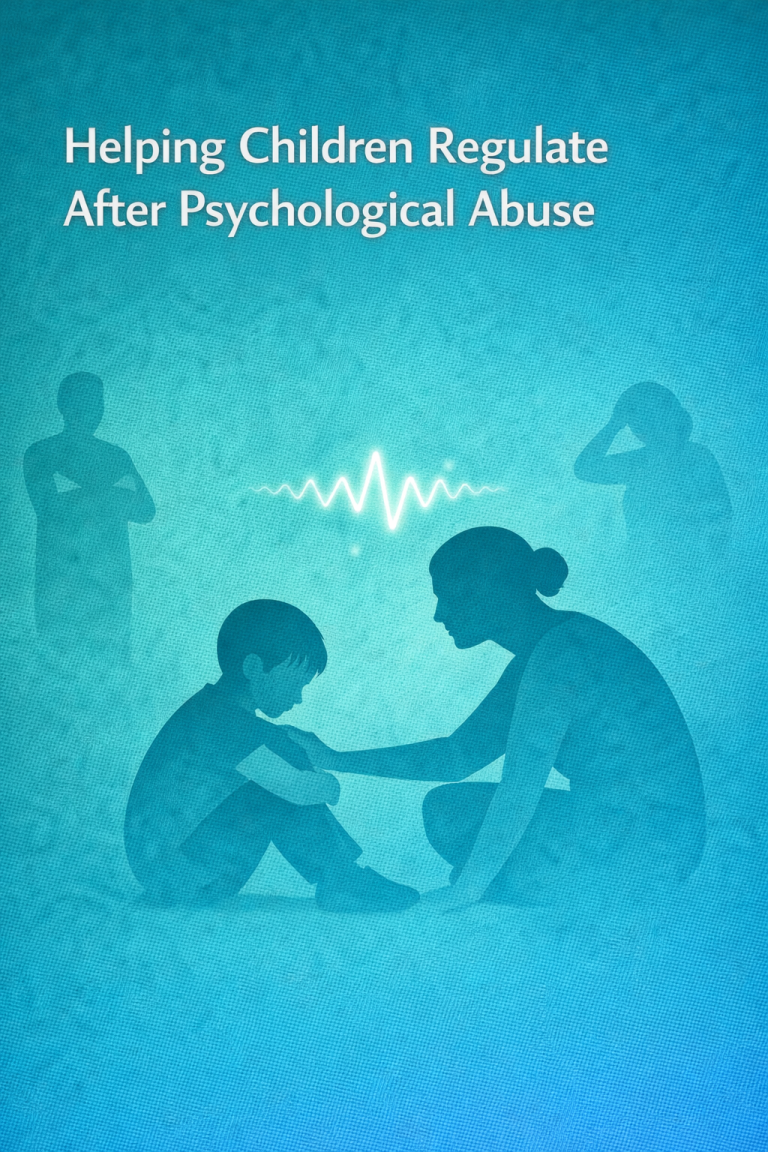
Regulation before reasoning
Children who have experienced psychological abuse, including narcissistic abuse, often struggle with emotional regulation. Expecting reasoning or logic before regulation can increase distress.
Trauma-informed care prioritizes safety and stabilization first.
Signs of dysregulation in children
Children may exhibit:
- Emotional outbursts
- Withdrawal or shutdown
- Anxiety or fearfulness
- Difficulty sleeping
- Somatic complaints
These are nervous system responses, not behavioral problems.
Supporting regulation at home
Trauma-informed regulation strategies include:
- Predictable routines
- Calm transitions
- Sensory grounding
- Co-regulation with caregivers
- Emotional validation
The role of therapy and coaching
Trauma-informed parent coaching helps caregivers provide consistent regulation, emotional safety, and protective structure for children after psychological abuse.
This support can help caregivers:
- Understand trauma responses
- Respond with confidence
- Reduce emotional escalation
- Support children’s nervous system regulation
👉 Learn more about Parent Coaching for Survivors of Narcissistic Abuse
If you’re unsure what kind of support fits your child’s needs, you don’t have to decide that right now.
👉 Start here to orient safely and explore support at your own pace
When you’re ready, you can also book a confidential consultation.
