
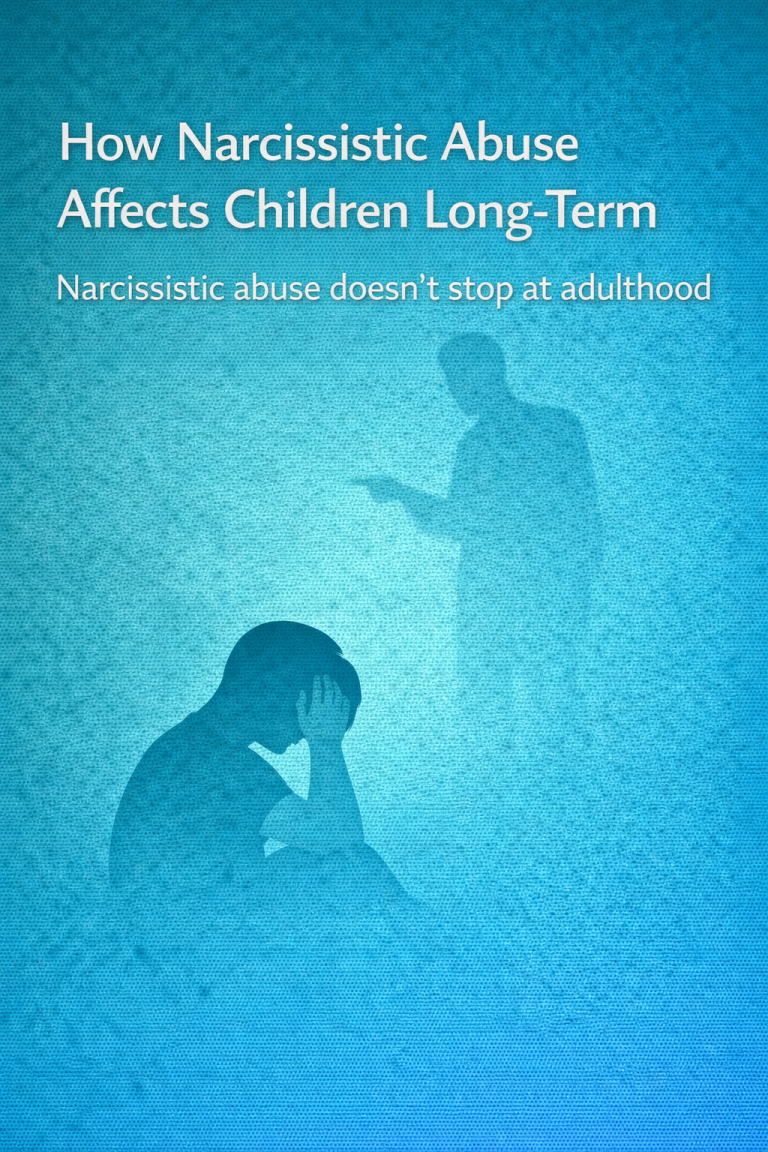
Narcissistic abuse doesn’t stop at adulthood
Many adults begin therapy believing their struggles are personal weaknesses, only to later discover that their emotional patterns were shaped by childhood narcissistic abuse. When children grow up in environments dominated by narcissistic caregivers, their emotional development is profoundly impacted.
These effects often persist long after childhood ends.
How narcissistic abuse impacts a child’s nervous system
Children rely on caregivers for safety, regulation, and emotional mirroring. Narcissistic parents often fail to provide this, instead prioritizing their own needs.
Children may learn to:
- Suppress emotions
- Stay hyper-alert to moods
- Take responsibility for adult feelings
- Doubt their perceptions
- Earn love through compliance
These adaptations are survival responses — not character flaws.
Long-term psychological effects in adulthood
Adults raised in narcissistic households may experience:
- Chronic anxiety or hypervigilance
- Difficulty trusting others
- Low self-worth
- Attachment insecurity
- Repeated abusive relationships
Why these effects are often misunderstood
Because narcissistic abuse is emotional rather than physical, its impact is frequently minimized or dismissed. Survivors may be told:
- “It wasn’t that bad”
- “Your parent tried their best”
- “Just forgive and move on”
Trauma-informed care recognizes the legitimacy of this harm.
Supporting healing across generations
Healing from narcissistic abuse often includes support for parents who want to protect their children from repeating harmful relational patterns.
Trauma-informed parent coaching helps survivors:
- Understand how abuse shaped nervous system responses
- Create emotionally safe environments for their children
- Interrupt intergenerational trauma cycles
- Parent with clarity, confidence, and compassion
👉 Learn more about Parent Coaching for Survivors of Narcissistic Abuse
If you’re unsure what kind of support fits your family’s situation, you don’t have to decide that right now.
👉 Start here to orient safely and explore support at your own pace
When you’re ready, you can also book a confidential consultation.
