
Survival mode after divorce helps you endure abuse, separation, and prolonged conflict. It carries you through sleepless nights, endless court dates, and ongoing stress. However, survival mode is not meant to be permanent.
When you stay there too long, it begins to exhaust your body, overwhelm your mind, and drain your spirit. The good news is this: there is a clear roadmap from surviving to thriving.
Signs You’re Stuck in Survival Mode
When survival becomes your default state, certain patterns often appear:
- You’re constantly on edge, waiting for the next crisis
- Your body feels tense even when nothing is happening
- Joy feels distant—you’re just “getting through” the day
These signs don’t mean you’re failing.
They mean your system has been protecting you for a long time.
Why Thriving Feels Impossible
When survival mode runs the show, safety can feel unfamiliar.
Because your nervous system has adapted to threat, calm may actually register as uncomfortable or unsafe. That’s why thriving doesn’t happen automatically. It requires intentional, supportive shifts that help your system relearn safety.
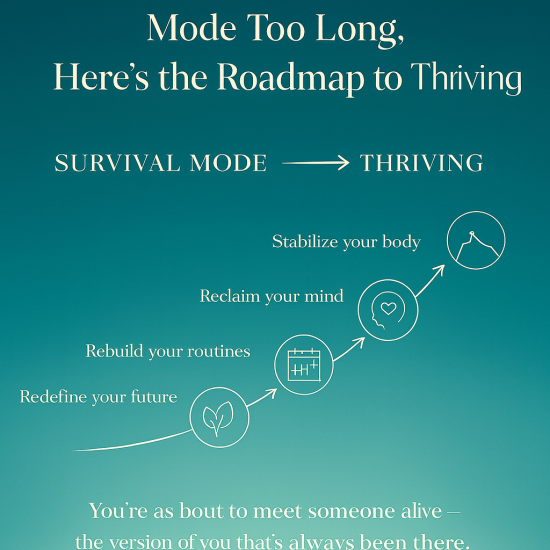
The Roadmap to Thriving
Moving out of survival mode happens in layers, not leaps. The path forward often includes:
- Stabilize your body. Support nervous system regulation through breathing, grounding, and rest.
- Reclaim your mind. Gently challenge intrusive thoughts and practice affirmations that rebuild self-trust.
- Rebuild your routines. Daily self-care isn’t selfish—it’s the foundation of thriving.
- Redefine your future. Coaching helps you set goals beyond survival, including joy, purpose, and freedom.
Each step restores capacity and choice.
Conclusion
Survival was necessary.
But you deserve more than survival.
You deserve rest, clarity, and a life that feels meaningful again. If you’re ready to move out of survival mode after divorce and begin thriving, you don’t have to do it alone.
Let’s walk the roadmap together.
