
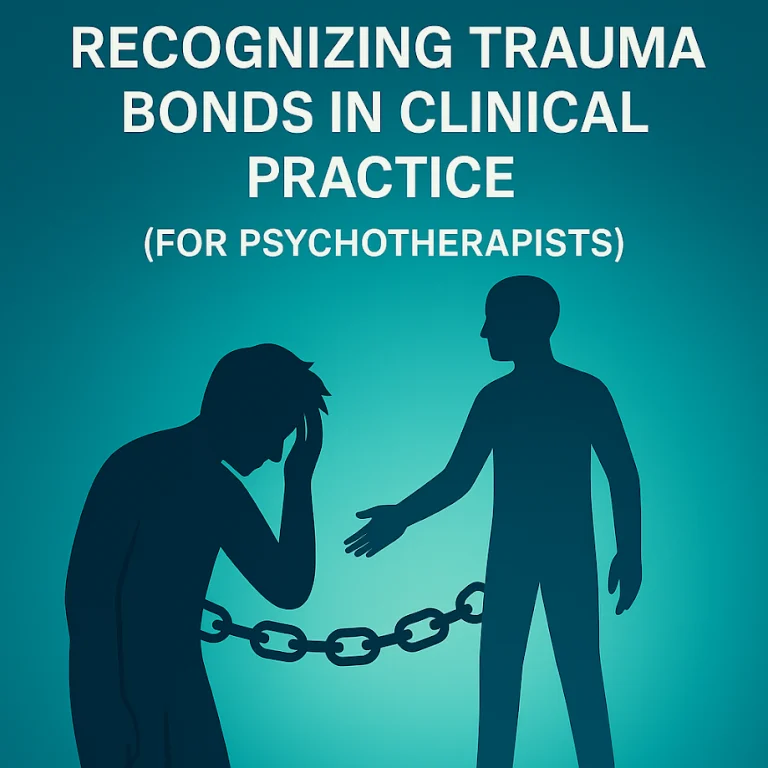
Many survivors return to abusive partners, leaving novice therapists confused. This is not failure—it’s the power of trauma bonding.
What Is a Trauma Bond?
Trauma bonds form when cycles of abuse and affection mimic addiction. Survivors become hooked on the intermittent rewards of love-bombing, even as they suffer harm.
Clinical Work
Teach supervisees to frame trauma bonding like addiction recovery:
• Relapse is common.
• Shame makes it worse.
• Compassion and relapse-prevention tools are key.
Encourage psychoeducation and grief work, helping clients mourn the person the abuser pretended to be.
👉 At Soteldo Psychotherapy Clinic, we train psychotherapists to recognize trauma bonds and guide survivors through breaking free.
