
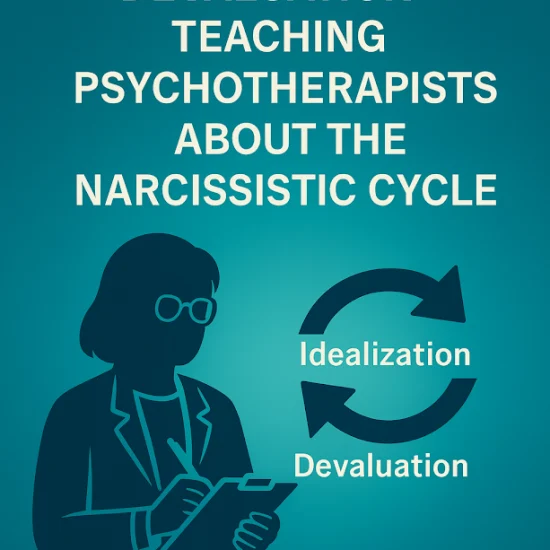
For psychotherapists, understanding the narcissistic cycle of idealization and devaluation is essential. Survivors often present with confusion, asking: “Why were they so loving at first, then so cruel?”
The Cycle of Idealization and Devaluation
• Idealization – Survivors are placed on a pedestal, showered with love, praise, and attention. This phase creates emotional dependency and often feels like the “perfect relationship.”
• Devaluation – Criticism, coldness, and cruelty gradually replace affection. Survivors begin to doubt themselves, their worth, and their perceptions.
• Discard – The abuser abandons, replaces, or threatens to leave the survivor, often abruptly. This leaves lasting trauma and reinforces the cycle.
This cycle creates dependency and deep trauma.
Clinical Strategies for Therapists
When working with survivors or training supervisees, therapists can:
1. Validate the reality of the cycle.
2. Help survivors see idealization as manipulation, not genuine love.
3. Support grief around the loss of the “idealized” phase.
Closing Note
Educating survivors about this cycle helps them stop chasing the illusion of “getting back” the person who once adored them.
👉 At Soteldo Psychotherapy Clinic, we train psychotherapists to identify and treat the impact of idealization/devaluation cycles.
