

• Home
  • Services
    • Trauma-Informed Psychotherapy
    • Survivor’s Group Therapy
    • Clinical Supervision
    • Brunch & Learns
    • Behavioural Reformation Programs
    • Organizational Training
  • Survivor’s Journey
    • Survivor Ebooks
    • Survivor Courses
    • Survivor Group
  • Training
  • Upcoming Events
  • Raquel Soteldo
  • Resource
  • Contact
  • Home
  • Services
    • Trauma-Informed Psychotherapy
    • Survivor’s Group Therapy
    • Clinical Supervision
    • Brunch & Learns
    • Behavioural Reformation Programs
    • Organizational Training
  • Survivor’s Journey
    • Survivor Ebooks
    • Survivor Courses
    • Survivor Group
  • Training
  • Upcoming Events
  • Raquel Soteldo
  • Resource
  • Contact
  • Home
  • Services
    • Trauma-Informed Psychotherapy
    • Survivor’s Group Therapy
    • Clinical Supervision
    • Brunch & Learns
    • Behavioural Reformation Programs
    • Organizational Training
  • Survivor’s Journey
    • Survivor Ebooks
    • Survivor Courses
    • Survivor Group
  • Training
  • Upcoming Events
  • Raquel Soteldo
  • Resource
  • Contact
  • Home
  • Services
    • Trauma-Informed Psychotherapy
    • Survivor’s Group Therapy
    • Clinical Supervision
    • Brunch & Learns
    • Behavioural Reformation Programs
    • Organizational Training
  • Survivor’s Journey
    • Survivor Ebooks
    • Survivor Courses
    • Survivor Group
  • Training
  • Upcoming Events
  • Raquel Soteldo
  • Resource
  • Contact
Appointment
Linkedin
Illustration representing internalized shame associated with narcissistic abuse.
Sep 3
Jegar
Uncategorized

Shame as a Core Wound of Narcissistic Abuse

Shame is one of the deepest wounds survivors carry. Narcissistic abusers deliberately plant shame, leaving clients believing “I’m not good enough” or “I’m the problem.”

Read More
Illustration representing psychological double binds and conflicting demands.
Sep 3
Jegar
Uncategorized

Working With Survivors in Double Binds (For Psychotherapists)

Survivors of narcissistic abuse often present with chronic self-doubt. They lived in double binds: “You’re too emotional,” yet “You’re cold.” No matter what they did, i
Read More
Illustration representing gaslighting and distorted communication in therapeutic contexts.
Sep 3
Jegar
Uncategorized

Naming Gaslighting – The Therapist’s Role

Gaslighting is one of the most destabilizing dynamics of narcissistic abuse. Survivors may enter therapy feeling confused, doubting their perceptions, and questioning their sanity.

Read More
Illustration representing memory gaps and fragmented recall associated with trauma.
Sep 3
Jegar
Uncategorized

Validating Memory Gaps in Survivors of Trauma (For Psychotherapists)

Many survivors of narcissistic abuse enter therapy worried about missing pieces of memory. They may say things like, “I don’t remember years of my life,” or “I can’t reca

Read More
Illustration representing projection and blame dynamics in narcissistic abuse.
Sep 3
Jegar
Uncategorized

Projection in Narcissistic Abuse – Helping Survivors See Through the Lies

Projection is a classic tool of narcissistic abuse. The abuser accuses the survivor of the very things they are guilty of—lying, cheating, being selfish. Over time, survivors int
Read More
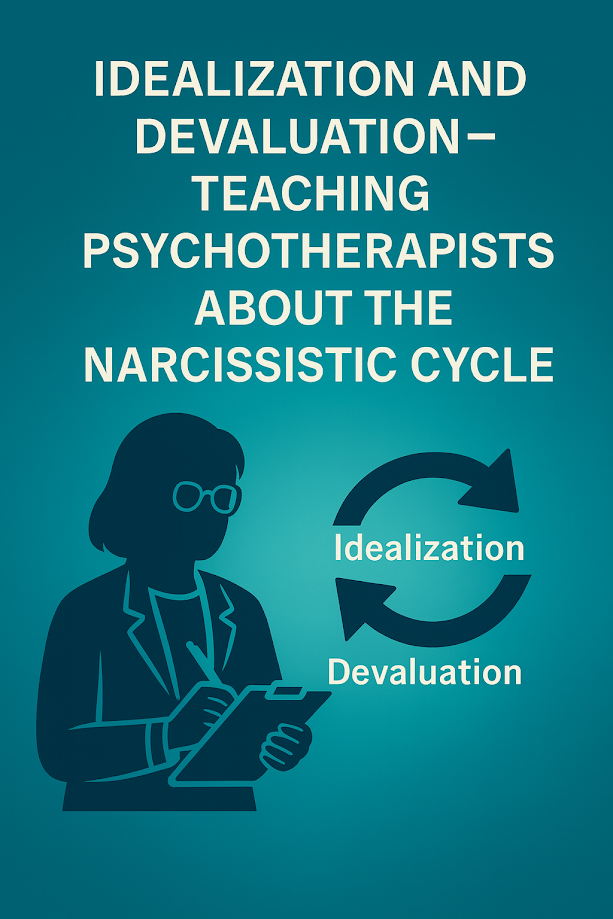
Illustration representing the cycle of idealization and devaluation in narcissistic dynamics.
Sep 3
Jegar
Uncategorized

Idealization and Devaluation – Teaching Psychotherapists About the Narcissistic Cycle

For psychotherapists, understanding the narcissistic cycle of idealization and devaluation is essential. Survivors often present with confusion, asking: “Why were they so loving

Read More
Illustration representing trauma bonds and conflicted emotional attachment.
Sep 3
Jegar
Uncategorized

Why Good Memories Keep Survivors Stuck – Understanding Trauma Bonds

Many survivors struggle with the question: “If it was abuse, why do I miss them?” This painful confusion is part of the trauma bond. What Is a Trauma Bond? Trauma bonds form wh

Read More
Illustration representing minimization of abuse and emotional masking.
Sep 3
Jegar
Uncategorized

“It Wasn’t That Bad” – Why Survivors Minimize Abuse

One of the most common phrases therapists hear from survivors is: “It wasn’t that bad.” Survivors minimize abuse for many reasons: fear of judgment, shame, or simply because

Read More
Illustration representing confusion and loss of clarity caused by emotional manipulation.
Sep 3
Jegar
Uncategorized

Living in the Fog – How Narcissistic Abuse Creates Confusion

Survivors of narcissistic abuse often describe their experience as “living in the fog.” They look back and wonder why it took so long to see the truth, or why decisions felt im

Read More
Illustration representing internalized shame associated with narcissistic abuse.
Sep 3
Jegar
Uncategorized

Shame Spirals After Narcissistic Abuse: How to Break Free

Shame is one of the heaviest emotions survivors carry. It is not accidental—abusers plant shame deliberately. Through belittling, blaming, minimizing, and mocking, they convince

Read More

Posts pagination

1 2 3 4
cropped logo png

Narcissistic Abuse Recovery Clinic Canada™

A Soteldo Psychotherapy Clinic initiative

Trauma-informed therapy, education, and recovery resources for survivors of narcissistic abuse, coercive control, emotional abuse, and complex relational trauma.

Founded by Raquel Soteldo, RP, our work supports survivors in rebuilding clarity, safety, boundaries, self-trust, and emotional freedom.

Serving Ottawa, Toronto, and clients across Ontario virtually.

Facebook Instagram Youtube Linkedin Pinterest Tiktok X-twitter

Start Here

  • Survivor’s Journey
  • Narcissistic Abuse Therapy in Ontario
  • Narcissistic Abuse Support Groups
  • Survivor Ebooks
  • Resources
  • About Raquel Soteldo

Services & Healing Programs

  • Trauma-Informed Psychotherapy
  • Narcissistic Abuse Recovery Therapy
  • Survivor’s Group Therapy
  • Attachment-Based Therapy for Adults
  • Anxiety Relief After Emotional Abuse
  • Parent Coaching After Narcissistic Abuse
  • High-Conflict Divorce & Co-Parenting Support

Training & Professional Support

  • Organization Training
  • Workshops
  • Classes
  • Clinical Supervision
  • Behavioural Reformation Program
  • Join Our Team

Contact

Address: 2211 Riverside Drive, Suite 404 Ottawa, Ontario, K1H 7X5

Phone: 613-400-0128

Email: info@soteldotherapy.com

Book a Consultation

© 2026 Narcissistic Abuse Recovery Clinic Canada™ / Soteldo Psychotherapy Clinic. All rights reserved.

Privacy Policy | Terms of Use | Accessibility | Cancellation Policy